
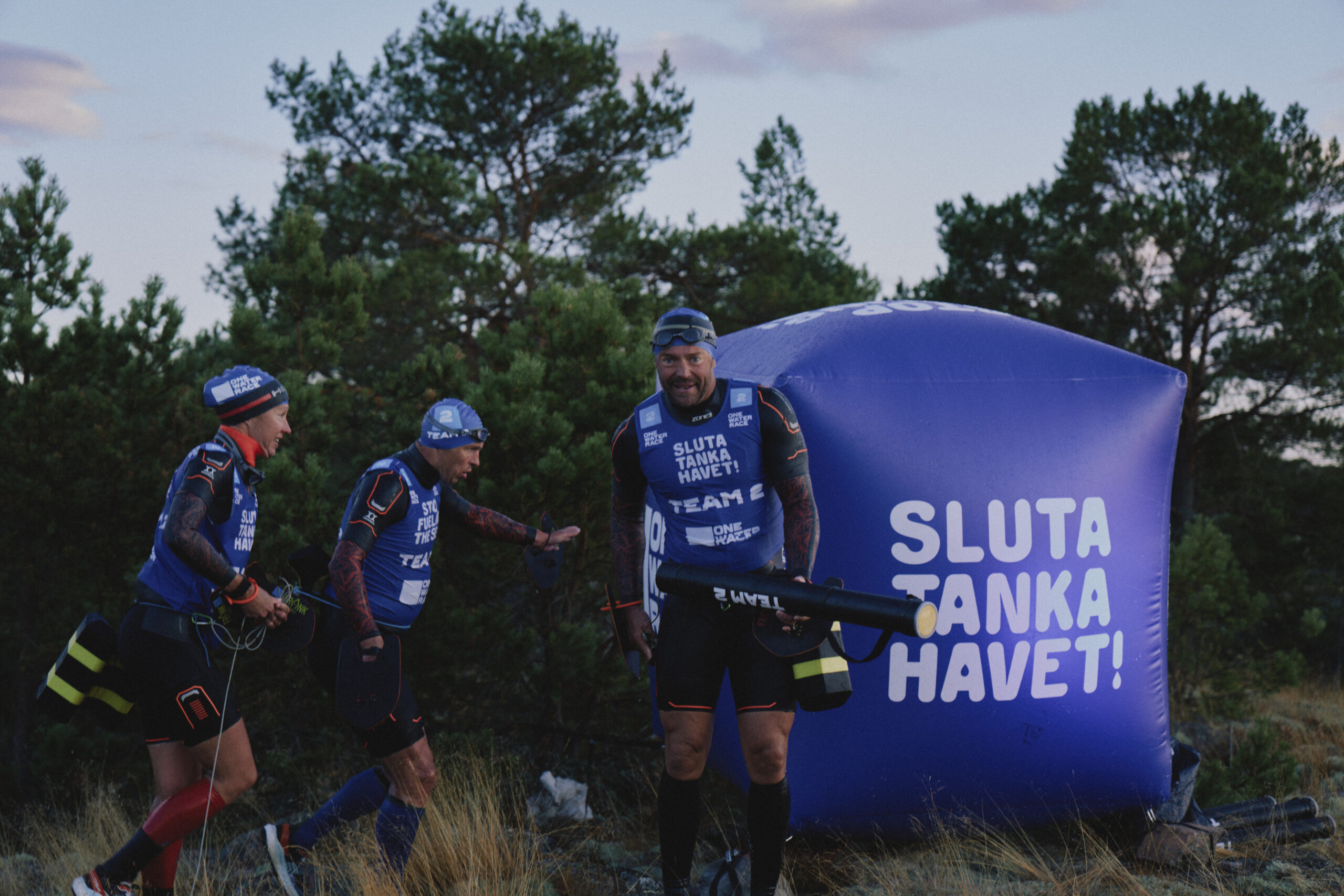
It took us a few days to process everything we experienced during One Water Race. After a race like this, there are so many experiences, thoughts and emotions mixed together.
We had some incredible hours out in the archipelago, shared experiences that will stay with us for a long time, and did many things we are proud of. But when we look back at the race, there is one thing we cannot get around: we did not make it to Landsort.
We were very clear with each other before the start. The goal was not to get far, to endure for a long time, or simply to put in a good performance. The goal was to finish. We did not achieve that.
The goal was to finish. We did not achieve that.
That does not mean everything we did was bad. Far from it. But it does mean that what we did was not good enough. That perspective is important as we now try to understand what worked, what did not, and what we would need to do differently next time.
The first 24 hours
The race started hard and fast, with most of the teams staying fairly close together for quite a long time. As night fell, the field began to spread out, but it was still a very open race.
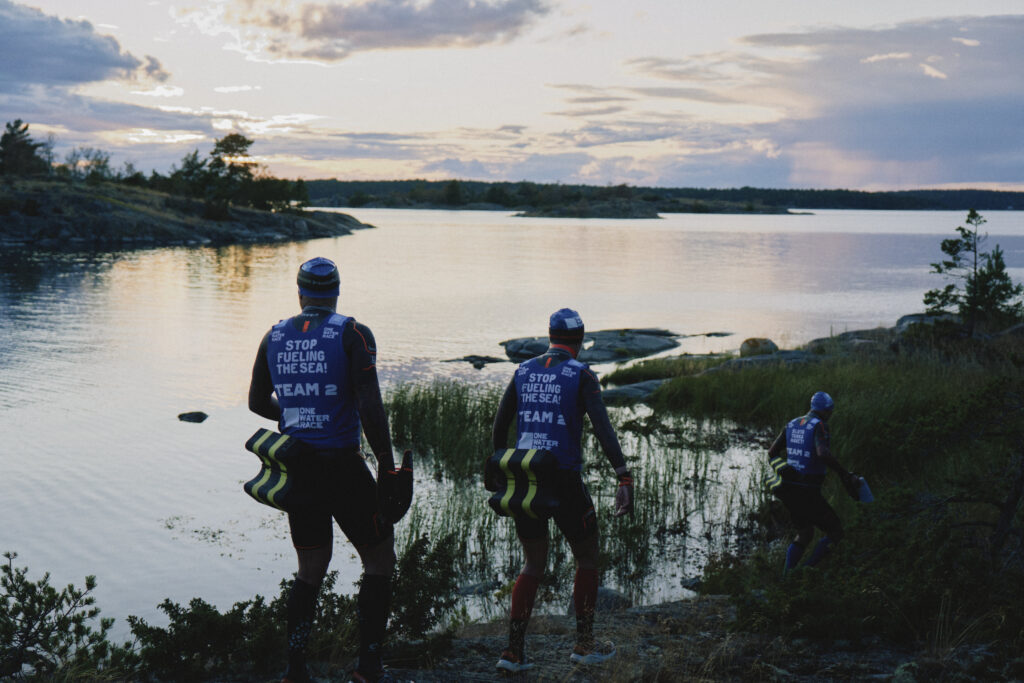
We made it through the first night without any major issues with fatigue. As part of our preparation, we had completed two 24-hour training sessions together, and we believe that made a big difference. Continuing through the night felt quite natural, and we were also blessed with fantastic conditions, including an incredible sunset followed by an equally beautiful sunrise.
Day two – still feeling strong
Day two also went well. We had originally planned a slightly longer food stop around “breakfast”, but because sports drinks and gels were working so well, we decided to keep moving instead.
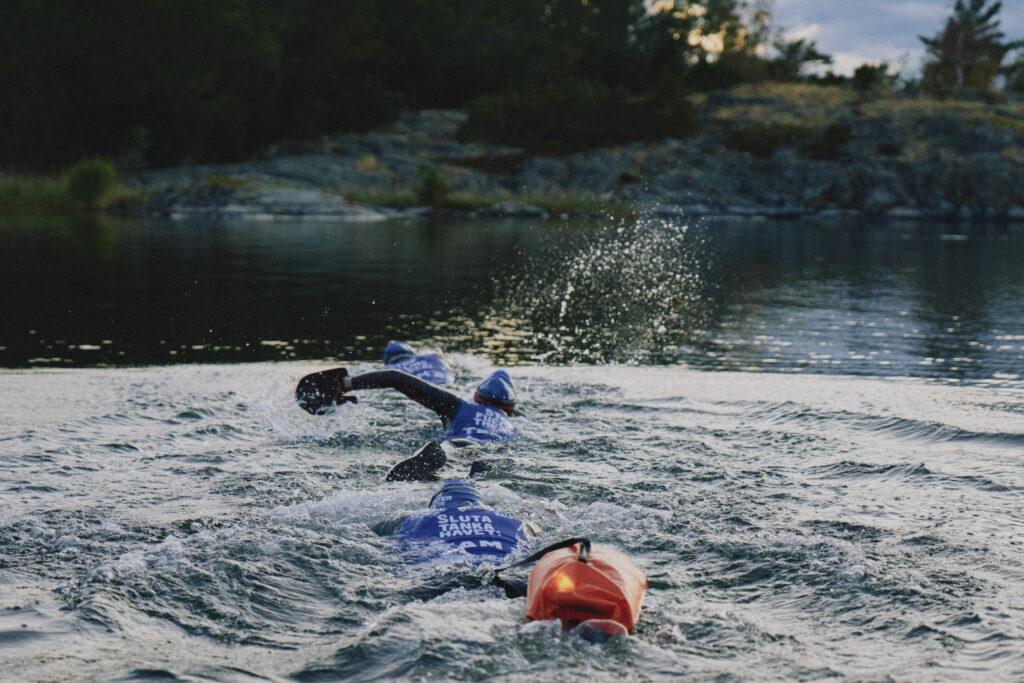
At the time, it felt like the right decision. Looking back, we are less certain. Even though our energy levels were good at that point, perhaps our bodies needed some real food and something other than essentially sugar to work with for another full day of racing. It is of course impossible to know exactly how much that affected what happened later.
This became something of a recurring theme when we looked back at the race. Many things felt right in the moment. It was only later that the consequences of several small decisions began to show.
It was only later that the consequences of several small decisions began to show.
From the support boat, the impression throughout much of the race was also that the team was functioning well. Looking back, however, we can identify several situations where we lost time or missed opportunities to create better conditions for the hours ahead.
The second night – our major navigation mistake
During the second night, we made one of our biggest mistakes of the race.
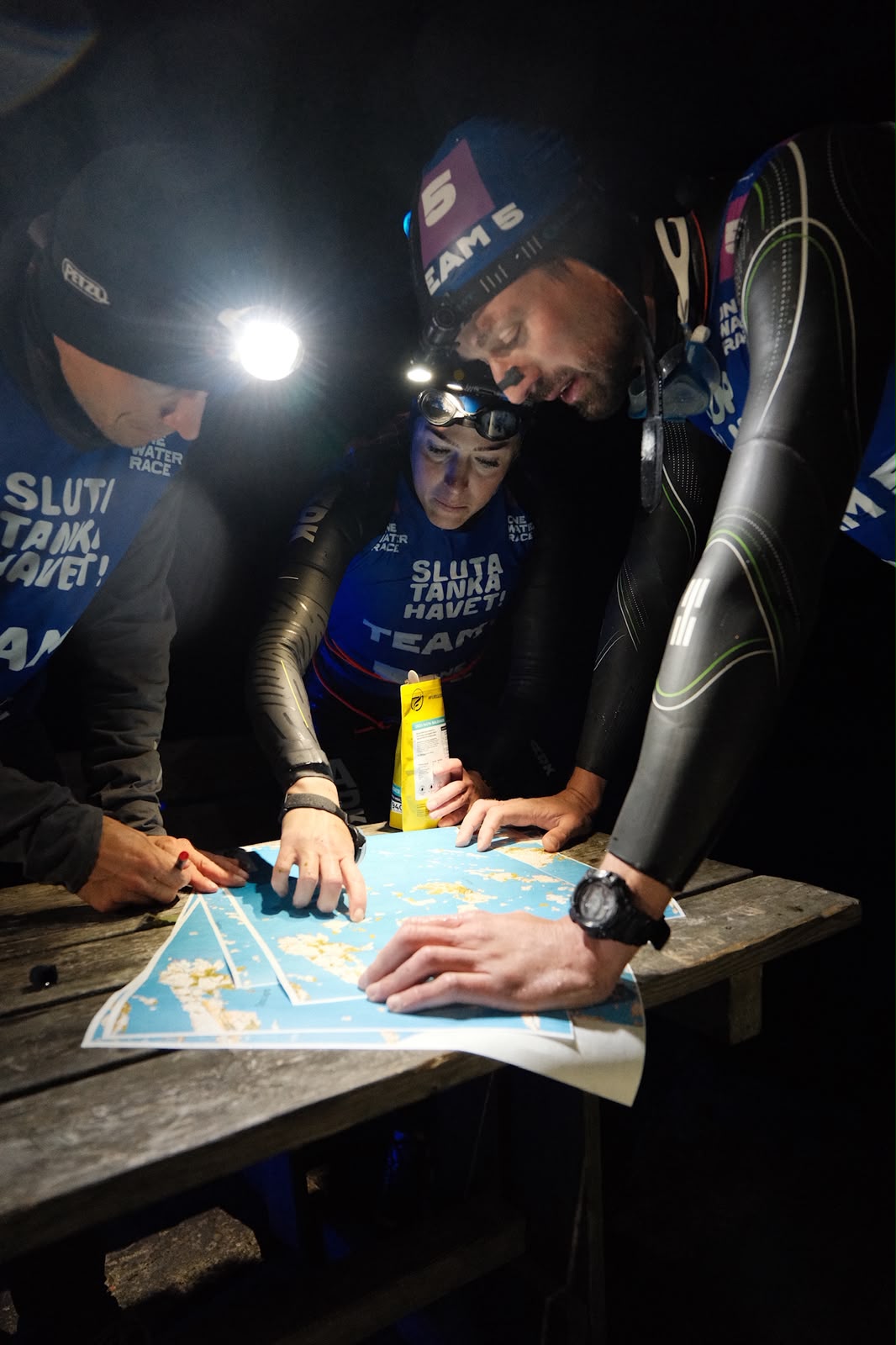
Suddenly, the compass bearing did not match the map. It was pitch black, the sky was overcast, and it was extremely difficult to use landmarks across the water for navigation.
After spending some time going around in circles, we eventually realised that the compass itself was broken. We had to put it away and continue using only the map.
Not carrying one – or preferably two – spare compasses was a major mistake on our part. In total, we lost almost an hour here, and it also created a lot of frustration that we could not find our way on an island we had visited only five weeks earlier.
In a race where small margins eventually became decisive, losing an hour is significant.
Ornö – when sleep deprivation started to hit
After two longer swims during the night, we reached Ornö.
Marcus B did a complete change of clothes there, something that, looking back, perhaps more of us should have done.
But this was also where sleep deprivation really started to hit for the first time
The morning was cold but incredibly beautiful, with mist rising from the lakes and fog covering the fields. But this was also where sleep deprivation really started to hit for the first time, particularly for Jenny. It became increasingly difficult for her to stay awake.
Crille had been told to meet the team at Ornö church. There was no way of knowing exactly how long it would take the racers to get there, so he packed up nutrition and brought it to the meeting point. Then there was really only one thing to do: get into the big parka and sleep until the sound of the team running along the road revealed that they were approaching.
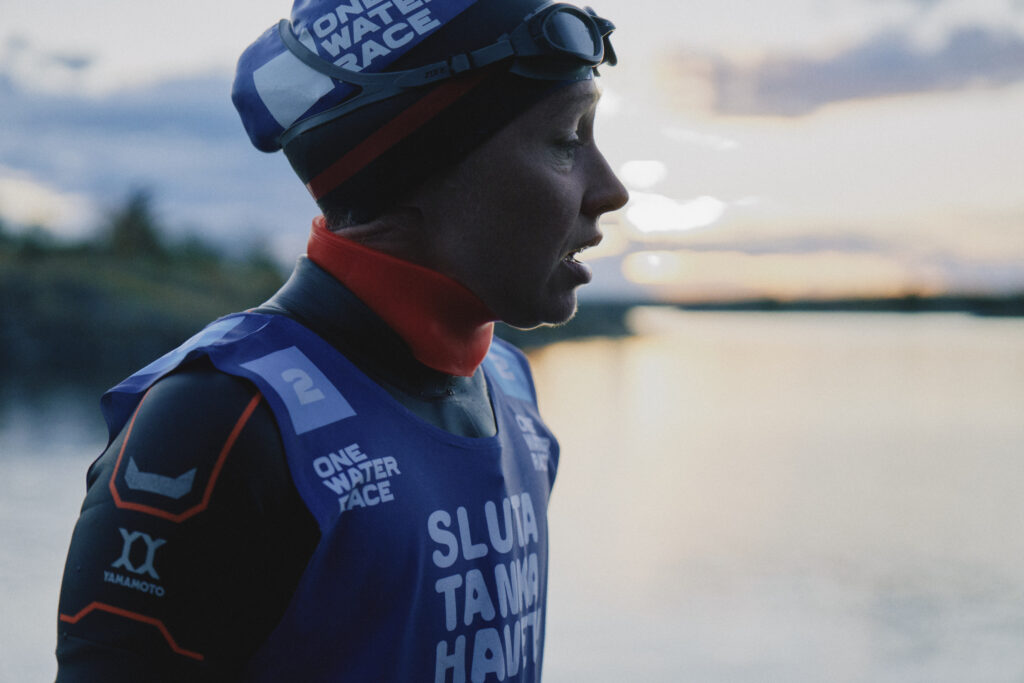
By the time the team reached the church, Jenny’s sleepiness was at its worst. She crawled into the oversized parka together with Crille, and they managed to get a couple of minutes of rest together by the side of the road before the team continued. It was only a short break, but the effect was clear.
Looking back, the real question is why we did not stop for longer. It would probably even have been worth Crille running the roughly 500 metres there and back to the boat to collect the other parkas so that the whole team could get a few minutes of proper sleep. That might have been far more valuable than the few minutes we potentially gained by continuing.
Of course, we cannot know whether it would have changed the final outcome, but considering how the race developed afterwards, this is definitely a decision we would make differently today.
Instead, we planned a short sleep break later, after CP14 as we were leaving Ornö. By then, the sun had risen, it had become warmer, and the worst of the sleepiness had already started to disappear. The team still got around eight minutes of rest, but that break probably came a few hours too late.
Route choices and decision-making under fatigue
Another clear lesson concerns the division of responsibility between the racers and support.
The longer the race went on, the more authority the support crew should probably have had. Several of our stops and transitions became longer than necessary, and we spent time on decisions that support could have made for the team.
Next time, support crew needs to be more decisive. The racers need to trust that support has things under control and instead focus their energy on continuing to move forward.
The same principle applies to route choices and navigation. The more tired the racers become, the more valuable it is to have someone who is relatively rested analysing the alternatives and helping the team make rational decisions.
A clear example came between CP10 and CP11.
The plan from the support crew was to use the northeastern part of Nämdö for a running section before continuing towards CP11 on Brunskär. Instead, the team entered the water earlier and swam south along the eastern side of Nämdö.
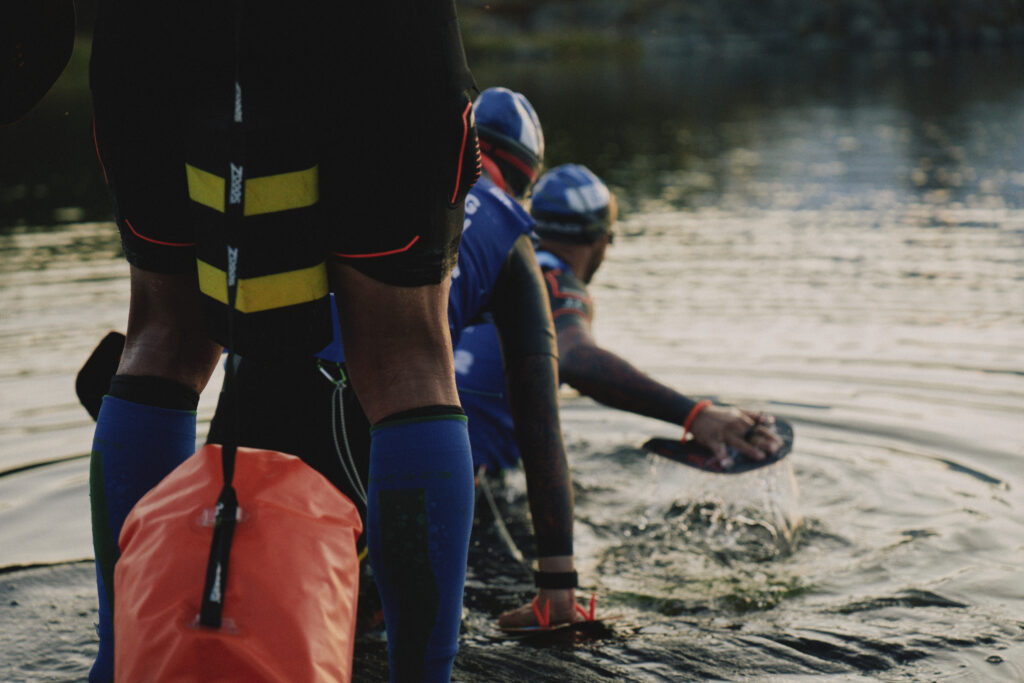
The swims were not extremely long, but this option meant spending more time in the water and took longer than using the running section on Nämdö. Looking back, the whole team agrees that the original route would have been better – and none of us can really explain why we moved away from it.
This is particularly relevant because swimming was probably our weakest discipline compared with the other teams. It is a clear example of how decision-making can change after many hours under physical and mental stress.
It is a clear example of how decision-making can change after many hours under physical and mental stress.
During longer swims, the racers also need to be able to trust support more when it comes to direction and the next landmark, both during the day and at night, allowing them to focus their energy on swimming and keeping the team together.
The support boat
Working from the support boat also gave us some important lessons.
We had two skippers with somewhat different levels of experience and seamanship, which at times affected how quickly and efficiently the boat could move and position itself.
On a few occasions, the racers reached a point before the support boat was where it needed to be, which meant that the team had to wait for the boat.
This was not decisive for the outcome, but One Water Race is made up of a huge number of small margins. The support boat should help the racers save time and energy, never cost them either. At the same time, parts of the archipelago are shallow and difficult to navigate, and sometimes patience is simply required.
For the support crew, however, sleep and energy management worked well. Being able to take short power naps while the racers were on longer running sections made a big difference. In total, support managed around 1.5 hours of sleep during our roughly 43 hours of racing, divided into several short periods, and energy levels remained relatively high throughout the race.
When energy became decisive
Once the worst of the sleepiness had passed, Marcus H and Jenny were still feeling strong and believed they could continue at a good pace.
At the same time, Marcus B started to lose energy. It became increasingly difficult for him to take in nutrition, and eventually he was no longer able to run.
We tried several different ways to turn the situation around, but any improvement was mostly short-lived.
We tried several different ways to turn the situation around, but any improvement was mostly short-lived.
We barely managed to make it to CP15, and after that the situation continued to deteriorate. Marcus B became dizzy and started staggering. The team helped him forward while we continued hoping that things would turn around.
Eventually, we had to start looking at the numbers. At the pace we were moving, we would eventually fail to meet the eight-hour rule, even if we might have been able to rest and continue for another one or two checkpoints.
At the inn on Utö, the racers therefore made the decision to stop.
After approximately 43 hours and 170 kilometres, our One Water Race was over.
It was an extremely emotional moment for the whole team. Before the race, we had been very clear that Landsort was the goal, and now it was obvious that we were not going to get there.
Stopping was still the only reasonable decision. When a team member’s health is affected to that extent, there is nothing to discuss. But that does not make the disappointment of ending up in that situation any smaller.
The race then ended with a Piggelin ice lolly down by the harbour while we waited for the boat. Thank you, Martin, our media runner, for the ice cream. 🫶
Not good enough
When we look back at One Water Race, there is a lot we can be proud of. We made it through 43 hours and around 170 kilometres together, got through two nights, and had many hours where the team worked exactly as well as we had hoped.
But we did not finish.
We came to One Water Race to reach Landsort. All the training, planning and preparation had that goal.
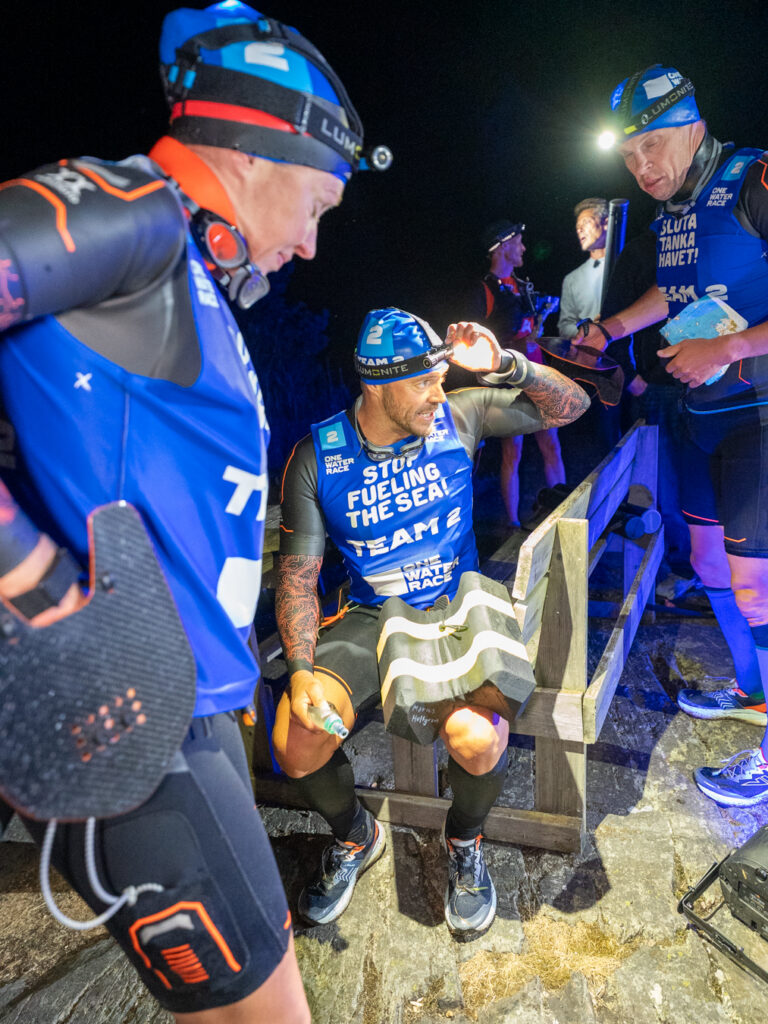
We did a lot of things well. But we were not good enough.
Looking back, we can see several things that together cost us both time and energy: the compass, the route choice at Nämdö, the late sleep break, the different energy levels within the team, and stops that could have been more efficient. No single one of these things necessarily decided the race, but together they became part of the reason why we did not reach Landsort.
Those are the lessons we take with us.
The journey – and the comeback
Not being satisfied with the result does not mean we do not appreciate the journey that brought us there. We had an incredible amount of fun preparing together and created memories that go far beyond the race itself. Along the way, we completed a 100 km trail race and two 24-hour training sessions together.
During One Water Race itself, we then experienced some of our toughest – and some of our finest – hours together.
We are extremely grateful to have been part of One Water Race 2026.
A huge thank you to Thomas for making this race possible, to everyone in and around the organisation, our skippers Ola and Johan, our media runner Martin, Mikael Morin for helping us during our preparations, our sponsors – Umara, Wolffwear, Frank Paddle, Gococo, SILVA Sweden – and everyone else who has been part of this journey.
But the story did not get the ending we had trained for.
We came to One Water Race to reach Landsort. We did not reach Landsort.
Now we know more about what this race demands, what we did right and, above all, what we need to do better.
So yes – we want another shot at it. We have unfinished business with Landsort.