
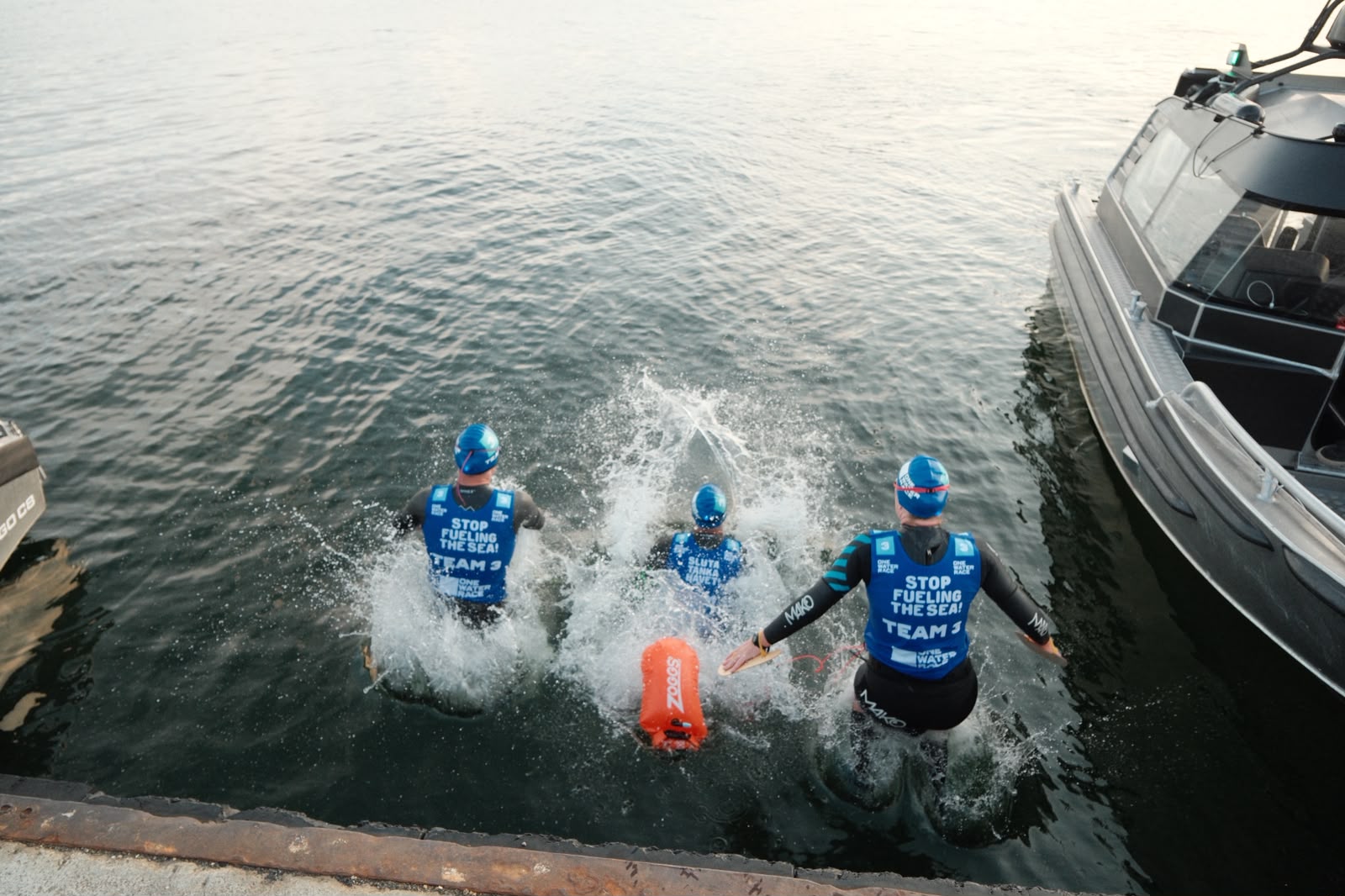
Pre-race
Chris: Our team’s journey to Landsort in 2026 began almost two years ago, when we signed up for the 2025 edition of the race. In 2025, we ended up dropping out of that race after about 30 hours of racing due to a medical issue. Afterwards, we all recovered and did some reflecting and then came back together to ask: “Should we race again in 2026? What would we do differently? What do we need to do to reach Landsort?” In the end, it was clear that despite the outcome, we all left the 2025 race full of confidence in the team and our ability to complete the challenge. It was clear we had the skills, toughness, desire, and communication needed to succeed. Even though Jarrod said 2025 would be his last race, we could tell he saw the potential of this team to reach Landsort and he couldn’t walk away just yet…
It was clear we had the skills, toughness, desire, and communication needed to succeed.
Fast forward to the 2026 race, and we were ready to go. Jess had spent the summer training for multi-day endurance efforts (probably harder than the race!), Jarrod and Kristen had honed their navigational skills and familiarized themselves with the islands at the southern end of the archipelago we’d never been to (and done some “casual” adventure racing as well), and I had spent the summer swimming and trail running while also trying to raise our one-year-old son at home (thanks, Emily and Cal!).
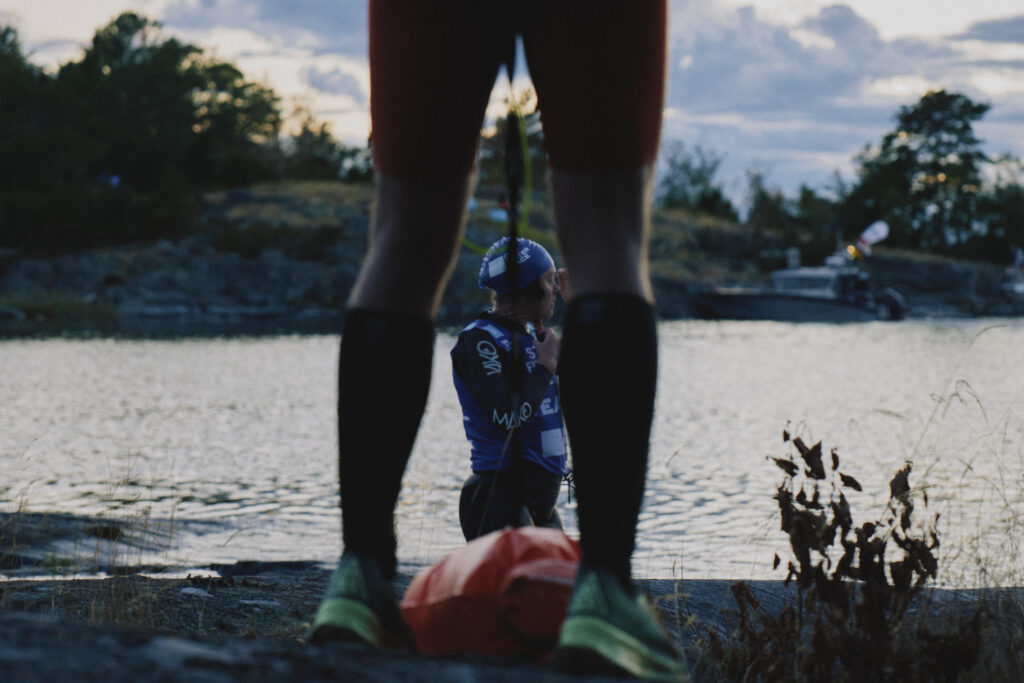
When we arrived on Arholma, I took my customary dip in the bay at the north end of the island to feel the water. It was still cold, but it was noticeably warmer than during race week in 2025; we were optimistic we’d have good conditions for the race.
Kristen: When we arrived on the starting island of Arholma, we had about 24 hours before the start of the race. As always, the food was amazing, the bay breathtaking, and the conditions in our favor. The winds seemed “normal” with a good gust here and there. Air temperature was pleasant, but we knew cooler nights were coming ahead. The best news? Warmer water temperatures throughout the archipelago.
Day one: August 17, 2026
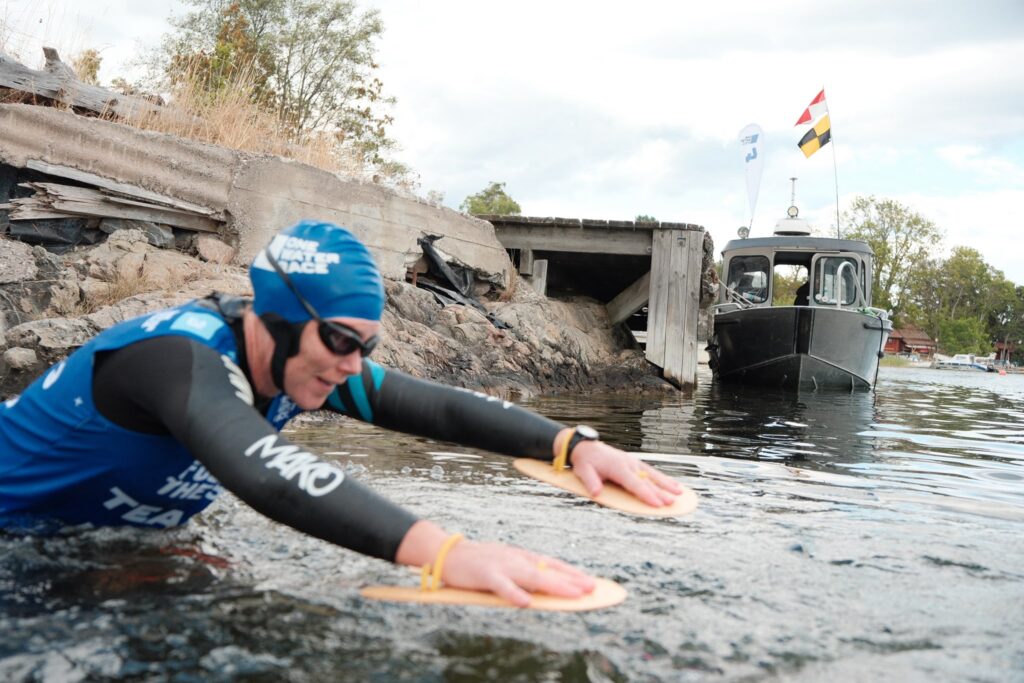
Kristen: Starting the race at 4 PM this year was definitely different, which came with an extra 10 hours of being awake on our bodies before the race even started.
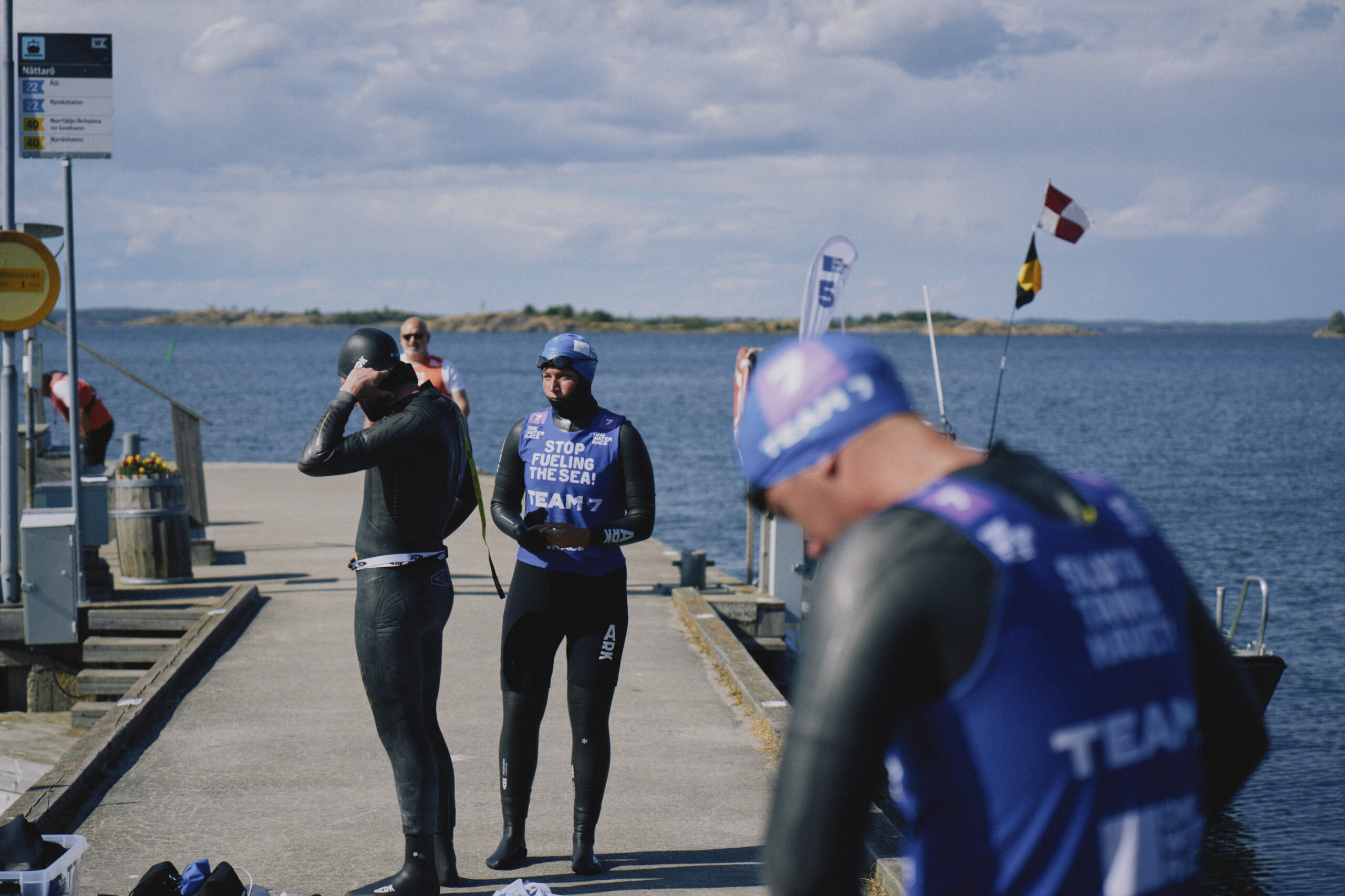
Chris: Somehow, Monday on Arholma both flew by and took forever. The teams and race staff ate breakfast, lunch, and afternoon fika with the looming presence of the race hanging over us. There was a lot of double-checking of gear and inventory of supplies. Then, both suddenly and finally, it was time to race. The race maps were handed out, Thomas counted us down, and One Water Race 2026 was on!
Then, both suddenly and finally, it was time to race. The race maps were handed out, Thomas counted us down, and One Water Race 2026 was on!
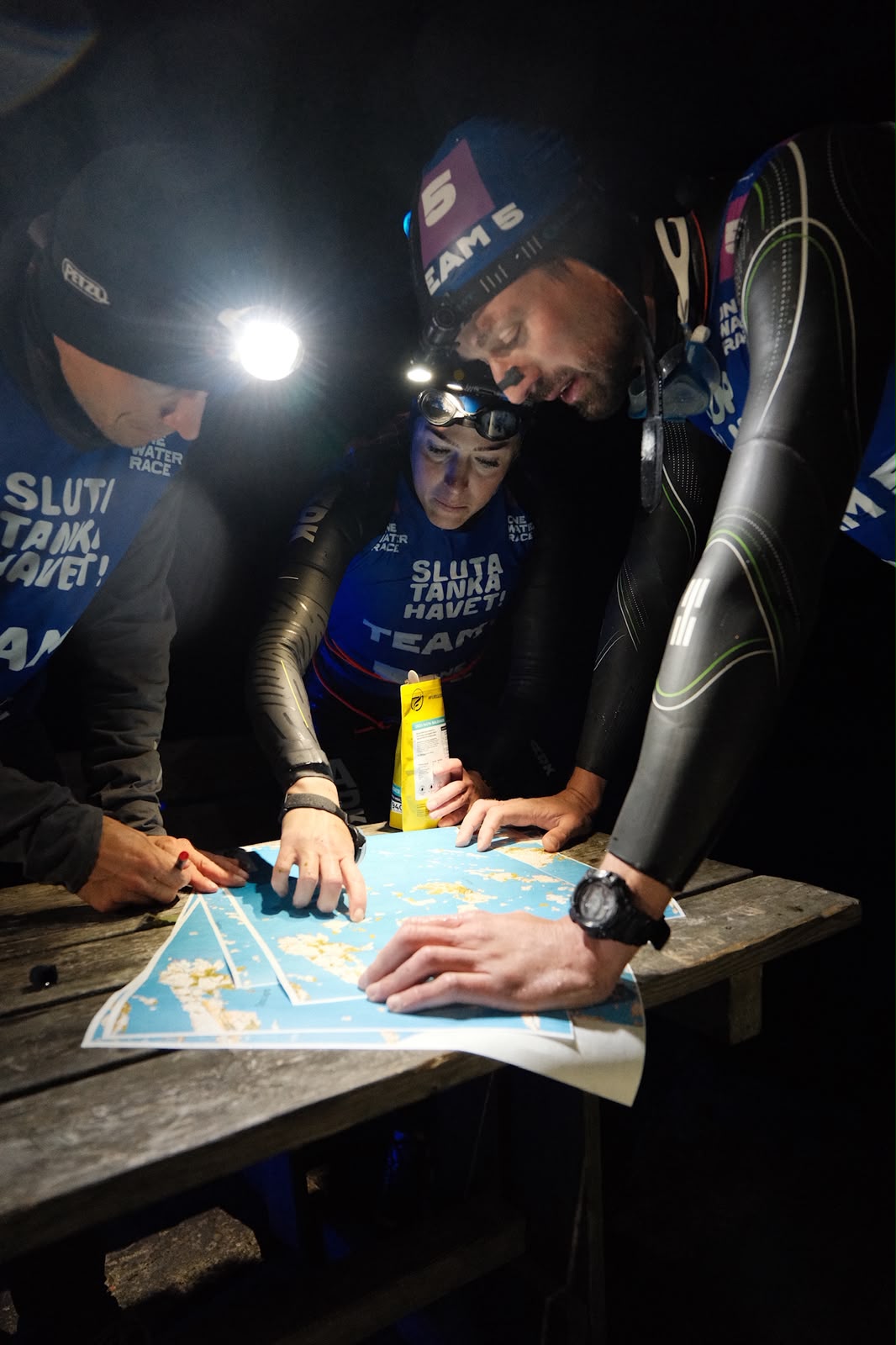
In a new strategic wrinkle to the race this year, there was an immediate decision between A and B checkpoints every time a stage began, including stage one right away. Jarrod and Kristen quickly planned our route over the first few islands as they walked and talked, Jess and I looked over their shoulders to see the maps, and then we were on our way.
The first few hours flew by, with teams (including us) trying to cover as much ground as we could during the few daylight hours on day one. Our transitions on the first day in and out of the water were not exactly crisp, so when we had a decision to make about how to reach checkpoint two on Yxlan from the mainland, we elected to take a single, long swim (about 4 km) instead of breaking up the swim with an island in the middle as all of the other teams were doing. This ended up being approximately even in terms of time (we neither gained nor lost more than a couple of minutes on Teams 1 and 6 in the lead), but it gave us confidence that we could make our own decisions and succeed with them, even if they differed from the other teams.
Jarrod: After we made it to the end of stage 1, I knew that Thomas had some navigation tricks he was going to pull on us with the A and B points, most likely at the start of each stage. One of the things our team had talked about was moving quickly, not wasting time in one spot. The A and B choices made it so we had to make quick, educated decisions and then follow our gut. Our team’s whole thought process was to do what we knew WE needed to do to be successful.
Jess: Jarrod and Kristen know so many of the routes and islands, at least theoretically, at this point, and Jarrod is so on point in terms of on-the-ground map-reading that it was possible to make those choices in a way that adapted well to our specific team’s strong points and strategy.
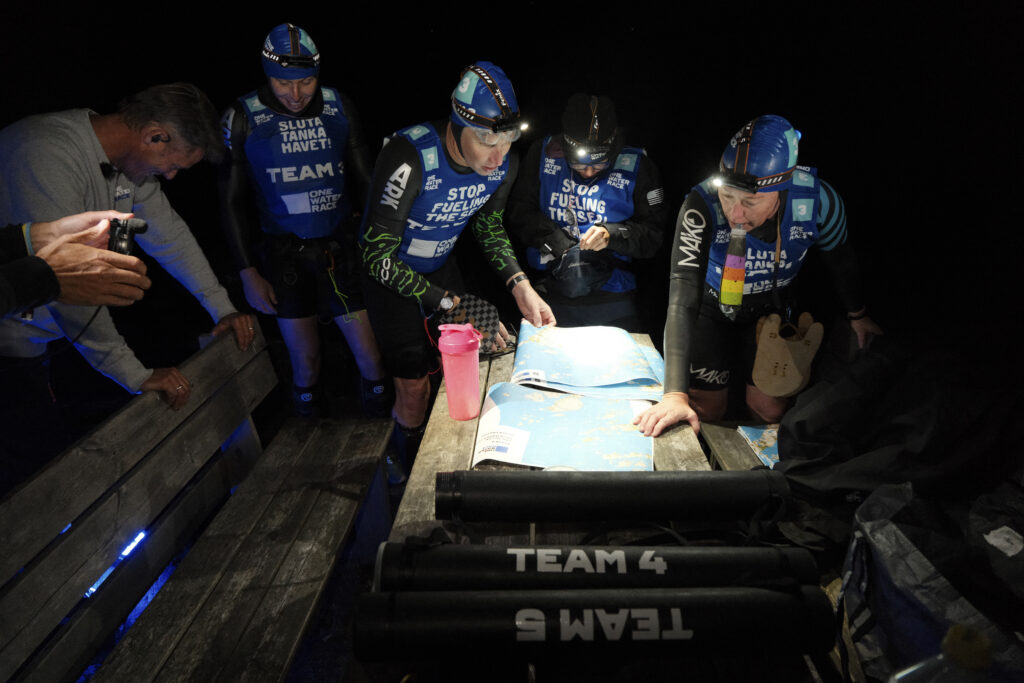
Kristen: At this point, we were 2 hours ahead of our planned schedule. This was excellent, as that was our “A” predicted pace. We expected to be at Yxlan and Blidö by 11:00 PM, but we arrived by 9:00 PM.
Chris: We then settled in for a long run on Blidö, then the large amount of swimming in stage two as the first night fell. Compared to previous races, the first night still felt fast since we had only started the race several hours before. The winds were calm and there was a clear night sky, making the night-time swimming enjoyable and allowing me to hold a straight line using the stars during the swims (with Kristen’s great support from the boat to set a bearing).
The winds were calm and there was a clear night sky, making the night-time swimming enjoyable and allowing me to hold a straight line using the stars during the swims
Jess: This is when the race “settled down”, as it were, and I knew that almost the toughest part for me was done, i.e. the first few hours when all of the teams go out super quick.
Kristen: The first night was incredibly peaceful. Glass-like waters, yet a gentle breeze. More importantly, the bugs were not TOO bad. It was a beautiful first night with a good glimpse of an aurora.
Day two: August 18, 2026
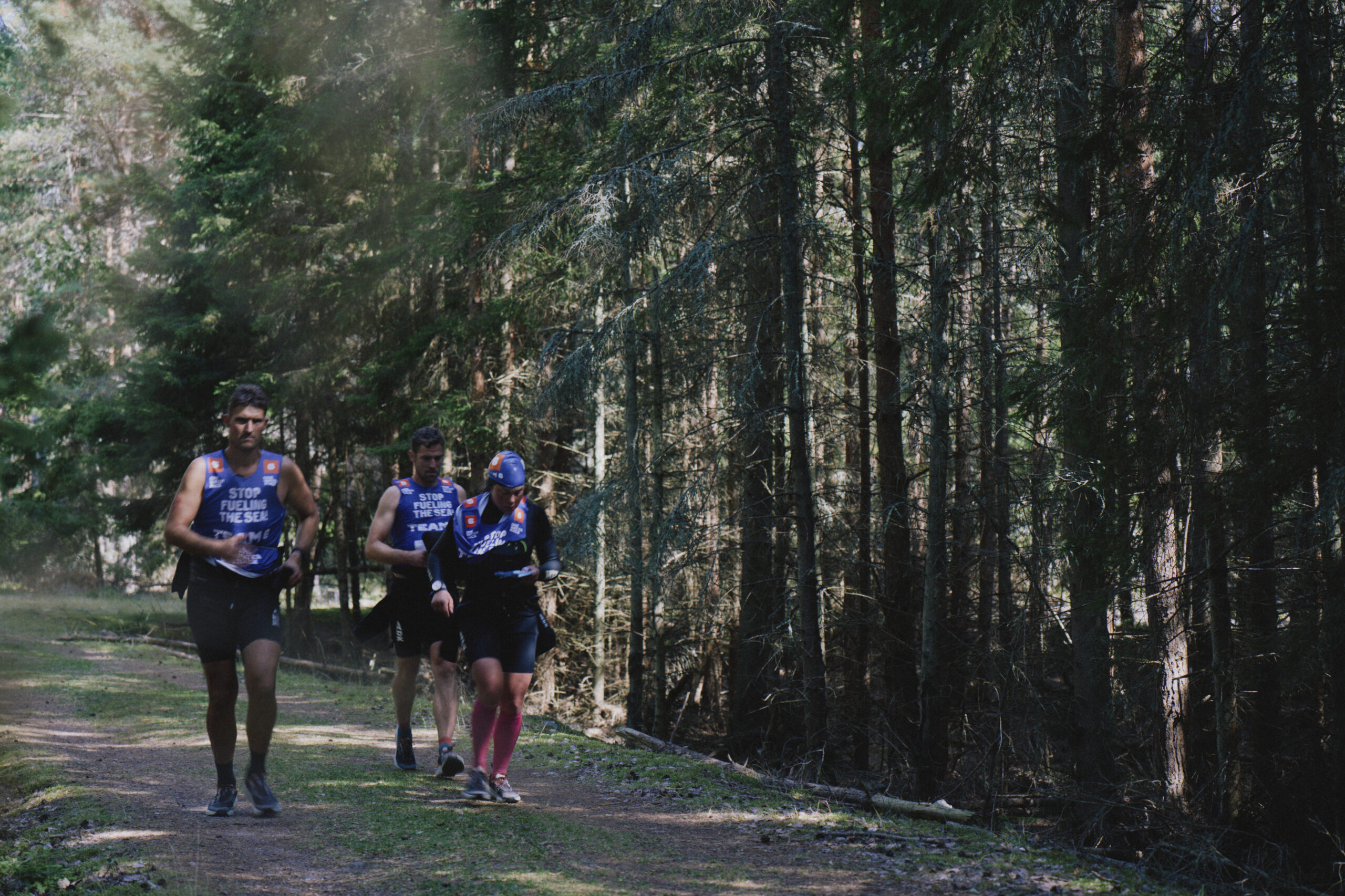
Chris: We continued south through the archipelago, hitting checkpoint after checkpoint and eventually reaching Runmarö for our planned midday power nap (20 minutes). In 2025, Runmarö was where it became clear to me that we were falling off our planned pace, spending a lot of time walking on the gravel roads that we needed to be running on as we battled waves of sleepiness and fatigue. This year, we were running every step, covering ground much faster than the year before. We knew the lighthouse was still so far away, but this was a good sign.
Jess: I could hardly believe the contrast. We were all still extremely focused on the task, and seeing that we were holding time was extremely motivating.
Kristen: This is where I knew we could actually make it all the way. Everyone was eating and drinking much better this year. The fanny pack was a huge win for us. I did get my first bout of sleepiness on Runmarö. Our spirits were high and we were locked in.
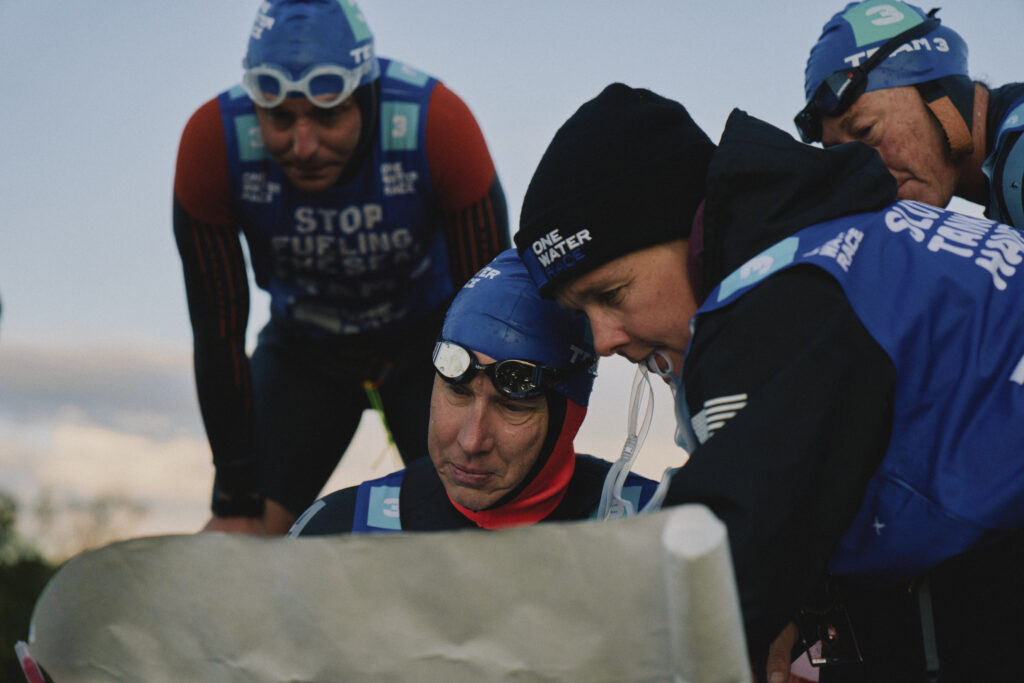
Jarrod: As we moved past the Hell Islands into Runmarö and down towards the nature islands, I knew that being smart with our micro nav would be important. We ran and moved quickly, made smart decisions and relied on our memory of the past years as well. The best part as we continued to move forward was blowing by the 3 places I had stopped in the past. Once we were on Ornö, the new terrain was invigorating and exciting.
Chris: Continuing on through stage three, there was a good amount of nice swimrunning as we dialed in our transitions and Jess kept us on task with “no faffing allowed.”
There was a good amount of nice swimrunning as we dialed in our transitions and Jess kept us on task with “no faffing allowed.”
Jess: This was our phrase of the race, along with “good catch”, which was Chris’ brilliant positive spin any time there was an error. Small words that make all the difference to keeping a positive attitude through the 3 days.
Chris: We made it through the nature islands as the sun was going down and began to approach Ornö in the night. I knew Ornö and Utö would be a key moment for us, as there were nearly 40 km of runnable roads on these two islands. We needed to keep running and avoid walking in order to keep the pace and reach Landsort in time. In the end, we did so well on these islands and I was so proud of our team. We were all so much stronger than in 2025, and reaching checkpoint 14 at the end of Ornö and seeing Thomas there (and having him run with us back up the hill!) was a memory that will stay with me forever. We were re-energized as the third day began and we began to approach the big swim: Danziger Gatt.
Kristen: The long runs on these islands are where I slept for 30 minutes and was able to actually take a second to get side tasks done. I knew you guys had to be close, so I ran up the road and was so happy to see you guys.
Day three: August 19, 2026
Chris: To cross the channel, we decided to swim from a more northern starting point (the harbor) and take the full 8 km swim at once. We thought staying north of some of the islands in the channel would protect us a bit from currents and southern winds for the first half of the swim at least. That worked out well for us, and the first half of the long swim flew by. We stopped after 90 minutes to get some calories in, and I thought we’d only been swimming for 20 minutes; time flies when you’re having fun, I guess?
Kristen: I remember, we started this swim around 3:30 PM and I wrote down to stop around 5:00 PM. I second that the time flew by. I developed my sea legs on that swim. I was grateful that we had this swim with those winds during the day. I was able to keep eyes on how close we were to islands and which ones we were passing. I loved my binoculars.
Jess and Chris: “We noticed!”
Chris: The second half of the Danziger Gatt swim was even choppier as we lost some of our protection and battled wind and waves. It was probably harder to be on the slow-moving, rocking boat than swimming for this part! Eventually, we finished the crossing and touched checkpoint 19 on the other side. We were in a bit of rough shape from swimming for so long, but we knew we had to keep moving to cover as much distance as we could before the sun went down.
That second half of the swim was the beginning of my land sickness. But I could see the checkpoint from 3 km out and I knew we were going to make it.
Kristen: That second half of the swim was the beginning of my land sickness. But I could see the checkpoint from 3 km out and I knew we were going to make it.
Jess: I put my dry robe on for the short island crossing and heated right back up – but did look like a witch (my friends all took screenshots that will haunt me forever…)
Night three: the final islands
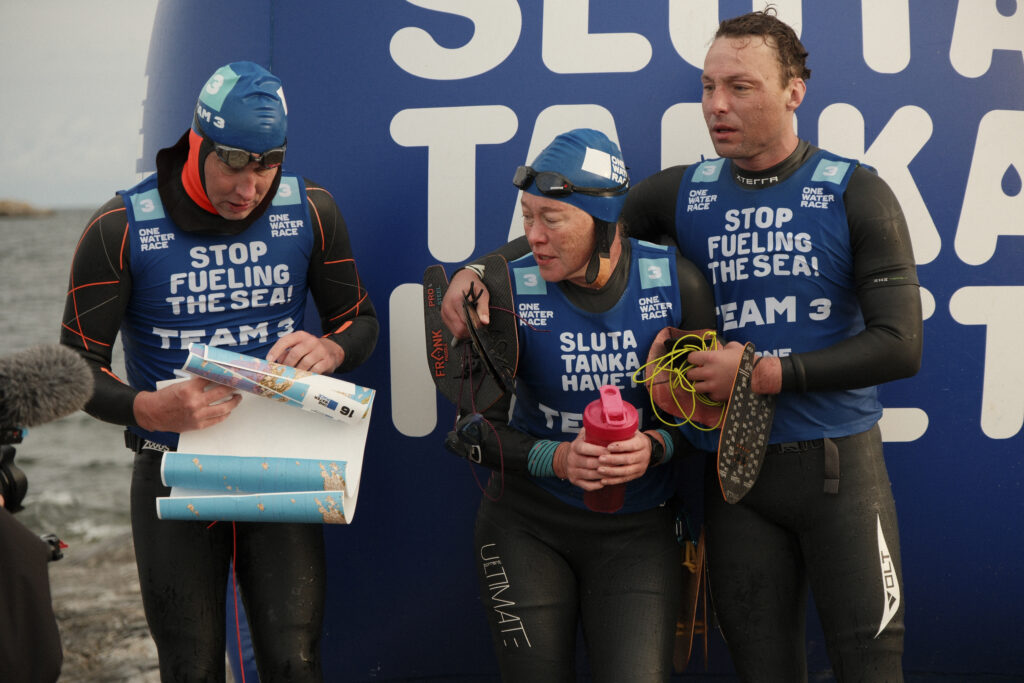
Chris: We ended up being the only team to choose to go to checkpoint 20A at that point. We had visited Nynäshamn and Järflotta as a team the week before the race and we knew there were some runnable trails over there, so even though it meant an extra island and transition, we had confidence that would be the faster route for us. This ended up being the moment we passed Team 7 and moved up to third place.
As night fell, I was starting to struggle with bushwhacking and falling behind, so we took a slightly longer route to stay on roads for me. We were all tired and battling sleep deprivation as the third night of the race fell, but we were now so close to the finish that we could taste the Landsort Lager; we kept on.
Jess: I had been told last year that the final islands were terrible – but had handily forgotten – until now when it all came flooding back as we hacked our way through the “final boss” thorn bushes on the end of Torö and Aspskär.
Kristen: At this point, this was new territory and the islands were steep small cliffs. The water was deep and powerful here. This made landing the boat incredibly hard. We were constantly getting pushed around. I was starting to get confused as the boat was spinning and it was getting difficult to keep my eyes on my target.
Chris: The last couple of swims and islands were tough for us. The water was choppy, so I was having trouble sighting and there were clouds, so I couldn’t use the stars to keep a bearing in the water. Kristen had to really help direct us in the water, and on land, bushwhacking through thorns and boulders was getting tougher and tougher. We knew we had a bit of a buffer from the eight-hour rule, but we could feel we were losing time.
We knew we had a bit of a buffer from the eight-hour rule, but we could feel we were losing time.
Kristen: This was the most difficult part as I was starting to hallucinate and the boat was extra crowded with people. I was starting to misplace my lights and other items. However, I knew we just had to get through this tough spot and get to the last island.
Chris: Finally, we got to the last swim, with the lighthouse in sight. This was (or at least seemed like) the choppiest swim so far, with waves high enough that I often couldn’t see the lights we were navigating towards. Finally, I noticed an aurora borealis off to the west, so I knew I could at least make sure I was swimming in the right general direction with each stroke. We ended up missing the tip of the island we were aiming for, and by a stroke of luck, we ended up hitting land right at the point where the road began. We had finally arrived at the final island.
Kristen: This was the only point of the race where I felt nervous. We were exhausted, mentally not really but kind of there, and we were in a NEW area on our third night. When I realized we were having a hard time navigating, I just thought to myself, just go to the rainbow. Even though we swam 1 km extra, we landed perfectly at the rainbow, which ended up being the sailboat harbor (decorated with many lights), exactly where the road began.
The finish line: reaching Landsort
Chris: We were flooded with emotions (which were extra raw and unfiltered with the fact that we’d been racing for over 58 hours) as we began our journey together as a team down the road to the lighthouse. We had finally achieved something we’d all attempted and failed before. We had worked together, communicated, persevered, and made it to Landsort. And a spot on the podium as well!
Jess: I made Chris take off his neoprene hood on the long easy road to the lighthouse so that he’d look his best in the finishing photos – you’re welcome!
Jarrod: Putting our feet down on Öja and heading to Landsort was a dream. I relished that moment and enjoyed walking and talking with our team as we moved towards the lighthouse!
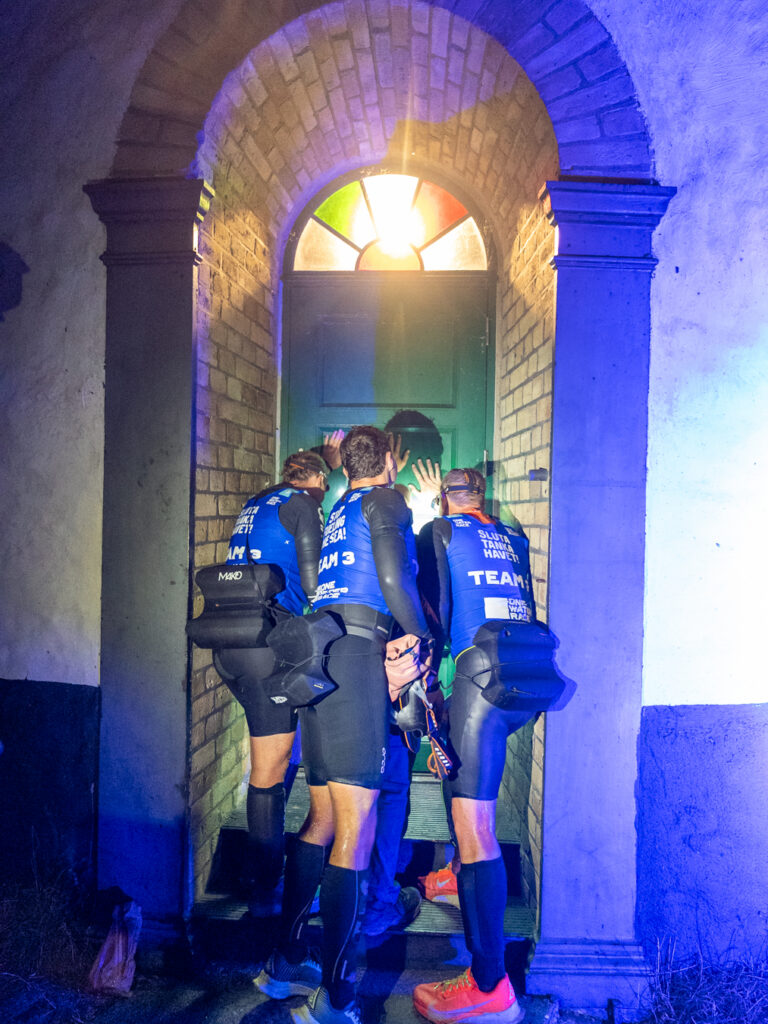
Chris: As we reached the lighthouse with our skippers and media runner, Thomas and seemingly the entire One Water team were there to welcome us as the first American/French team to reach the lighthouse! It was after 2 AM local time, more than 58 hours of racing, but the overwhelming shared sense of accomplishment with the team was a happy moment that I will never forget. At last, we had done it. And of course the burger and Landsort Lager was the best meal I’ve ever tasted.
Jess: I second that: what an amazing welcome in the middle of the night. The emotion of finishing will be stamped on my memory forever. Thanks to Lotte for the best burger and shower ever. I will always regret falling asleep mid-burger and never finishing it. But damn, that sleep felt good.
Jess: I thought I understood the One Water Race after 2025, but it was just scratching the surface. This game is 90% mental, as long as you have been meticulous with the planning and training prior, and I was lucky enough to be able to rely on 3 individuals that are incredibly strong mentally, whilst being hugely generous and positive team players at the same time. We were a unit, all the way through, even in the hardest parts. And that made it seem almost simple. One foot in front of the other, one stroke after the next.