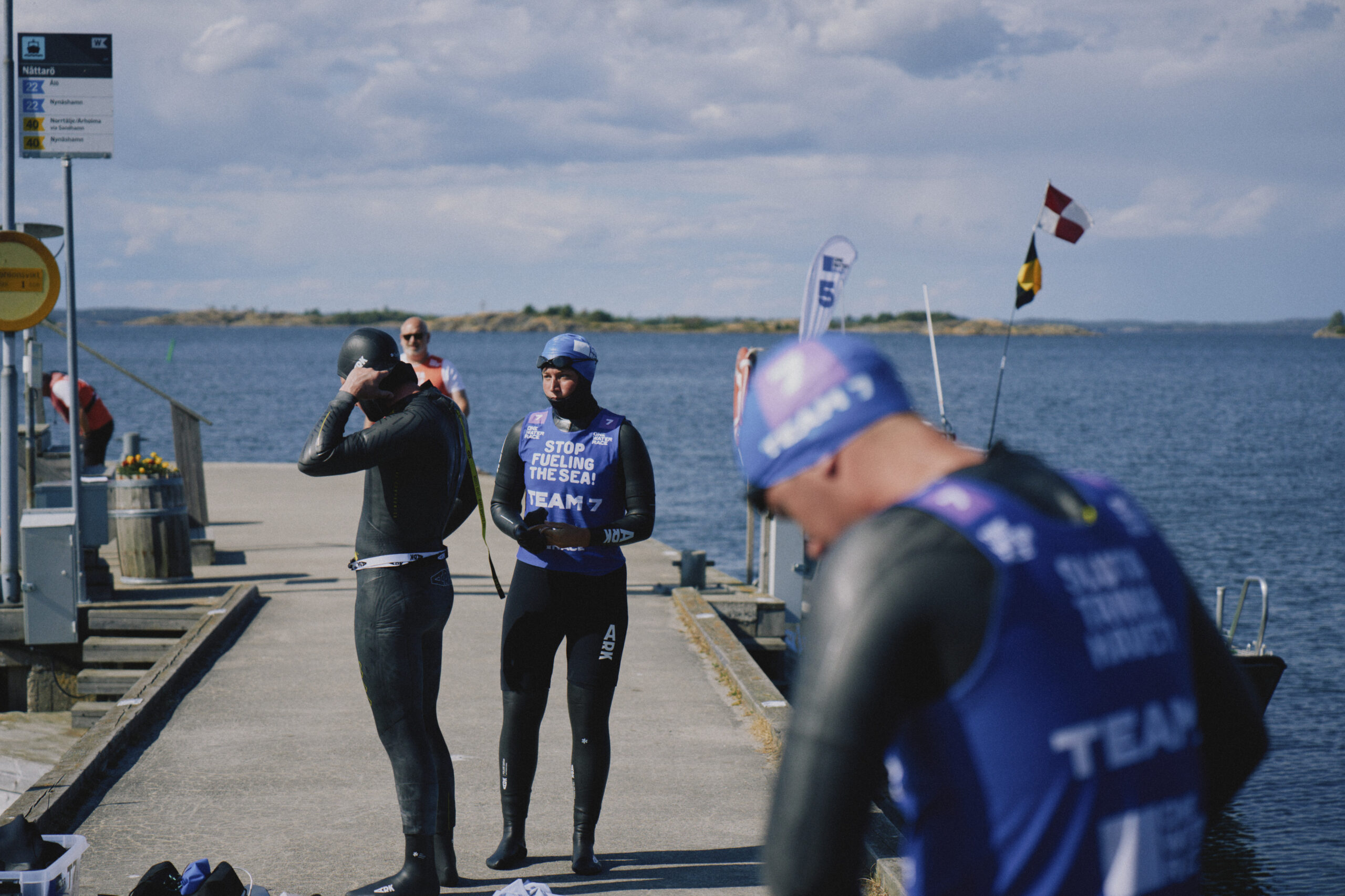
Going into One Water Race 2026, Team 8 felt confident in our groundwork and planning, and in the team that we put together. Jonas, an OWR veteran having finished the very first year of the race; Kawika (Beek), with two years of OWR-dedicated preparations and unfinished business; Mara, a newcomer drawn like a moth to a flame from the first moment she heard about OWR; and Andy, a lifelong endurance athlete, career Marine, and one of the most experienced swimrunners in North America. We dedicated ourselves to becoming one team – strengthened by international visits, shared training, pushing ourselves to new limits, and our commitment to the goal. We arrived at the start line fit, calm, and ready. With three of our team members coming from the US, the 4 PM start time worked to our jet-lagged advantage. We spent much of the morning sleeping, eating, and resting – feeling fully alert, fueled, and prepared on the starting line.
The race pace began hot, as it always does, and we went through the first few checkpoints with the leaders.
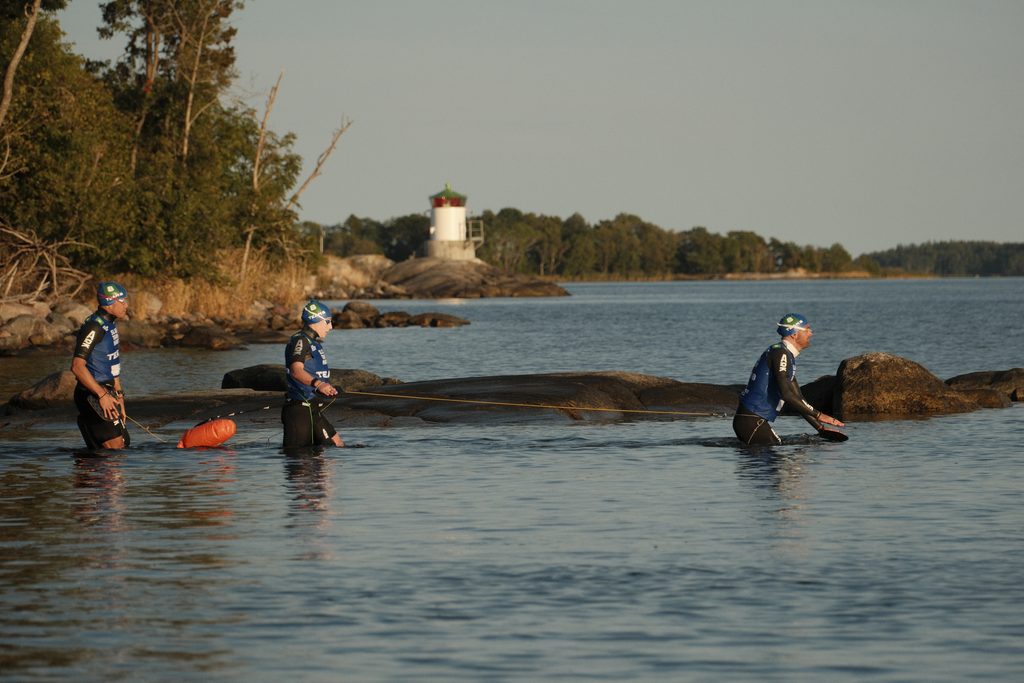
The race pace began hot, as it always does, and we went through the first few checkpoints with the leaders. Our running was steady and our swimming was fast. We were excited about having three strong swimmers splitting the swims, and the effect on our speed showed. While we consistently lost small amounts of time to teams with more efficient support transitions, we made up the difference quickly in the water and were able to stay with the front teams. It was exhilarating to run as a lead pack from the start through Östernäs, each team confident in their chosen routes and bolstered by the camaraderie and competitive aura of the group. Mara kept us at our intended run pace and led many swims off the front, keeping a good cadence, executing solid sighting, and selecting clean exits. Andy’s organization kept these early transitions tight, and he made improvements on the fly.
With the arrival of our first sunset, we transitioned into night mode, and Jonas’ swimming endurance chops showed as he took the entire long swim into the fading light. It was breathtaking to watch all the teams and support boats stretch out over the channel alongside the massive ferries. The sun dipped below the horizon in the background, and at the end we were greeted by Thomas as we rock-hopped over to the next island.
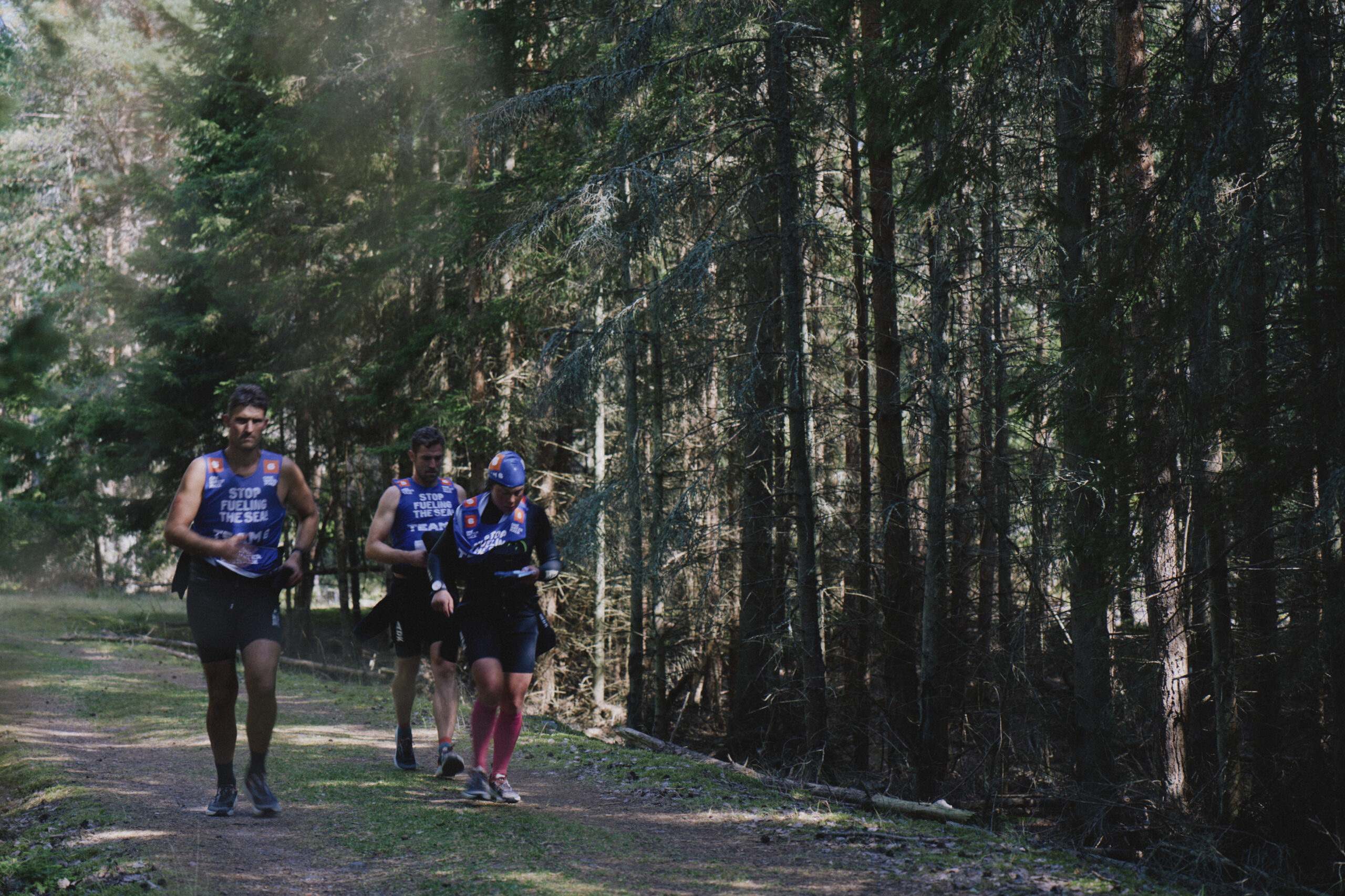
The top teams all arrived on Yxlan at the same time and up to this point mostly followed the same route. Our plan was to run the length of the island, sticking to the roads for easy and dry night navigation, while taking the opportunity to have a hot meal on the go, along with a coordinated team bathroom break. One of Beek’s favorite parts of One Water Race is the navigational strategy and racing while fully engaged in the maps. We felt confident in the route we charted and the plan we made. This is the first part of the race where teams started to split, and it is always so interesting to see the navigational strategies of other teams unfold in real time. It gets your gears turning, thinking about different possible route choices, rooted in specific knowledge of the map and terrain. It isn’t until teams start taking different routes based on their unique strengths and calculated risks that One Water Race really gets interesting.
Night navigation is inherently challenging, but we executed well, always orienting to our present location before making measured, thoughtful decisions that kept us from losing time.
Night navigation is inherently challenging, but we executed well, always orienting to our present location before making measured, thoughtful decisions that kept us from losing time. There was even an instance in which support directed us to a different island than planned at night, and within minutes Beek had identified the mistake and adjusted the route to get us back on track, losing almost no time. The islands were ticking by, and we lost ourselves in the race. Just before heading into a 5 km swim right before dawn, Mara became momentarily overcome by awe as the gravity of what we were doing and the bond we had built washed over her. We shared a group hug, then Mara locked in to begin leading our last dark swim of the night, watching the silhouettes of the teams that had opted to break up their long swim hop across an intermediary island to our left. This long swim felt incredible and filled our team with confidence that we could handle any future swim that One Water would demand of us. A sky full of stars gave way to a beautiful sunrise that greeted us with new warmth, and we found ourselves within 2 hours of the top teams.
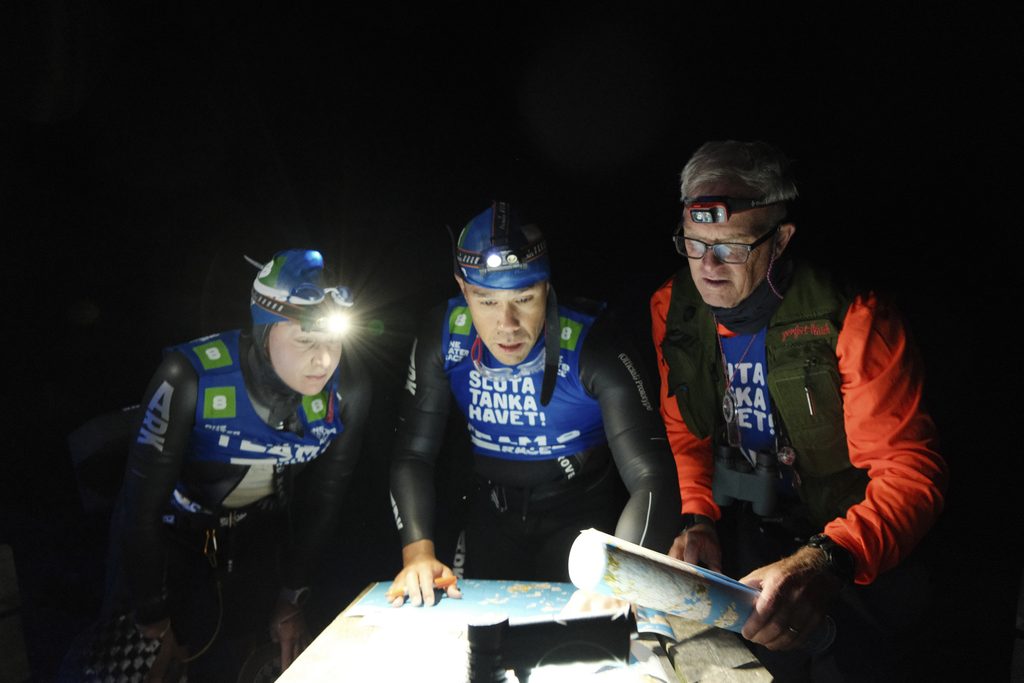
Through the next morning, we had stuck to our strategy, and it was working well for us. Mara and Jonas were leading the swims, saving Beek’s mental capacity and focus for navigation. He nailed the navigation going into day 2, especially on Hell Island, where he set a bearing and led us straight through the island, all of us unbothered by the island’s ominous reputation. We crisscrossed with multiple teams during this stage, catching glimpses of the competition across swims and on the trails, and felt confident in our position relatively close to the front. The remainder of the morning and into the afternoon, we were in a flow state, enjoying our swimrun adventure through the archipelago. These familiar islands were even more pleasant because we passed through during the day instead of the darkness of previous years. Energy was high, and we were moving together as a single unit. Even when slight navigation errors were made, nothing costing us more than a few minutes, the team took it all in stride, supporting each other through every trial and decision. We each had roles to play and were settling in to execute accordingly. As the day progressed, Jonas smartly focused on refueling calories to regain strength, taking down anything Andy put in front of him, and Mara kept the media runner and the viewers at home sufficiently entertained. Clean navigation and strong swimming kept us within 2.5 hours of the leaders at checkpoint 9 … but then things started to change.
Across the next few islands, our progress began to slow. Mara was not getting enough oxygen, and her legs were not responding.
Across the next few islands, our progress began to slow. Mara was not getting enough oxygen, and her legs were not responding. We lost speed in the water, so Beek stepped in to help lead swims. We started choosing navigation routes that would have less technical, up-and-down climbing over more direct headings. Around sunset, Mara became incredibly cold and was audibly wheezing after one of the swims, what we now know was fluid in her lungs. We rallied as a team, put on emergency ponchos and parkas, and got her warm enough to continue moving. We opted to break up longer swims with quick stops on islands to shorten the distance of any given swim. However, with each swim the wheezing got worse, and after the final 2 km to checkpoint 11, a swim that felt years long, it was difficult to justify continuing without first seeking a medical evaluation. We had added 90 minutes over each of the previous 2 checkpoints and were now falling well behind the leading teams.
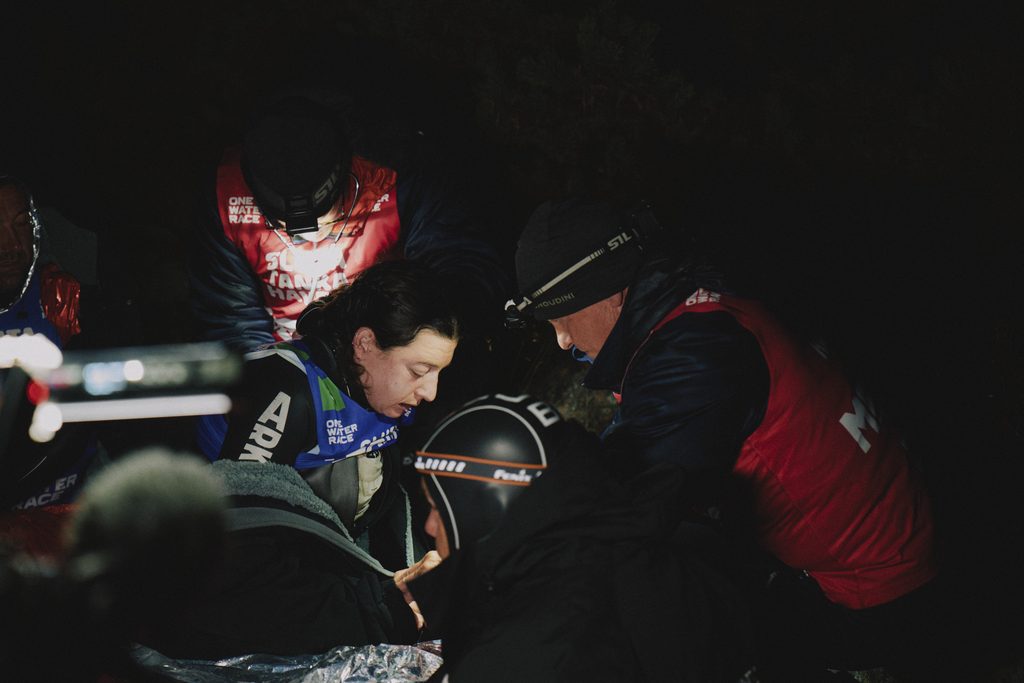
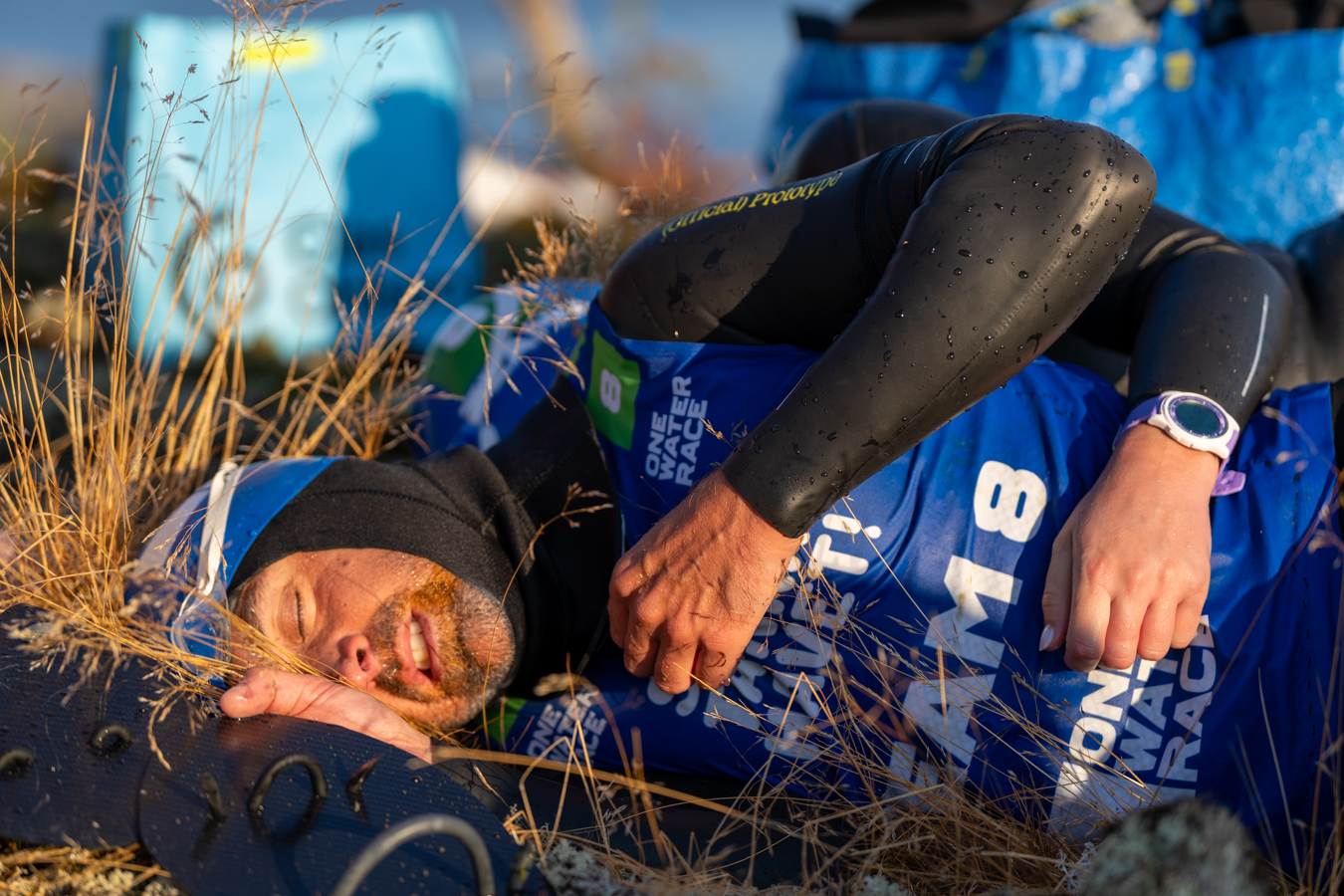
We reached the checkpoint and called the medics. Showing her determined spirit and strength, Mara voiced that despite feeling terrible, she would continue to race so long as she was cleared. Andy prepped hot soup and Jonas helped bundle Mara to get her body temperature up, while Beek plotted the next route, in case we could continue. It was a long wait for the medics, and even though we were all starting to warm up, we could still hear the rattling in Mara’s lungs. The medics arrived, examined Mara, and explained that she was in the acute symptomatic stage of SIPE and her oxygen levels had dropped dramatically. After 31 hours, it felt like we were just getting started. It was an extremely difficult and emotional decision, but it was one we made as a team to protect the health of all our members. While the race results fell short, the journey itself was spectacular, and the overall experience was absolutely unforgettable.
It was an extremely difficult and emotional decision, but it was one we made as a team to protect the health of all our members. While the race results fell short, the journey itself was spectacular, and the overall experience was absolutely unforgettable.
There was a lot to process, but it was hours, not days, before we knew we wanted to come back. It is an extraordinary experience to traverse the beauty that is the Stockholm archipelago with a team that you trust and can rely on. Yes, we came to race, but at the same time we understood that we were partaking in a truly astounding adventure that filled us with awe. The race has not left our minds alone since leaving the course. One Water Race is not meant to be easy. It will stretch the boundaries that you think are possible. It’s not meant to let you sleep at night. The project continues.