
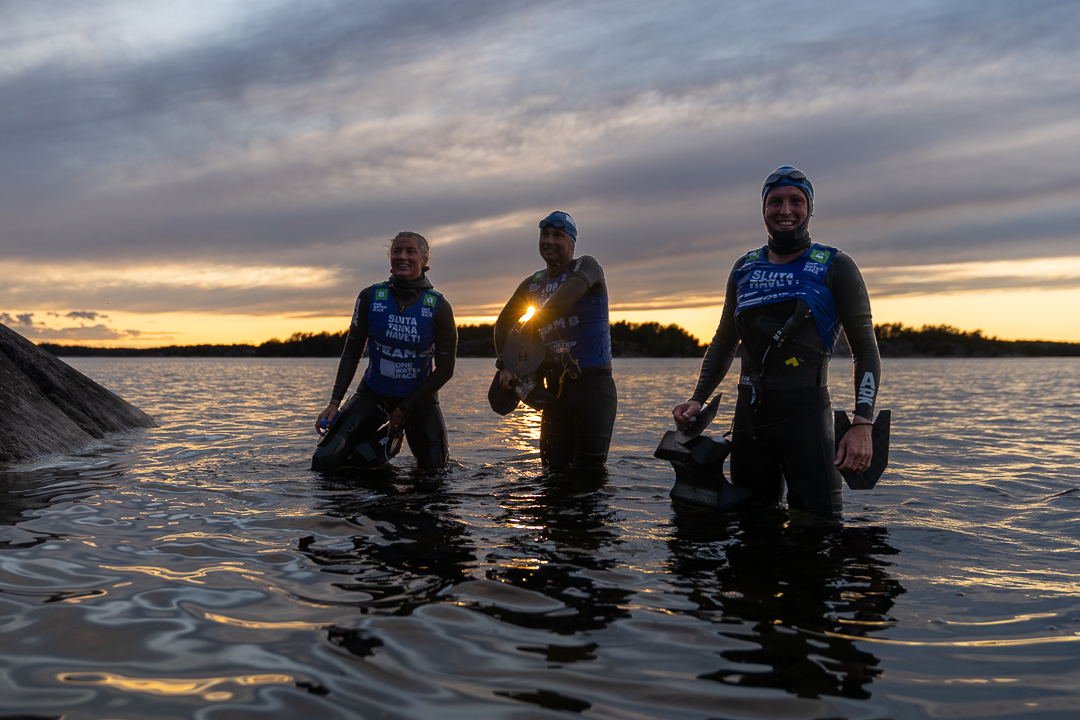
The feeling going into OWR 2025 was so different from 2024 — we knew what awaited us, and that nervousness about belonging was gone. We were convinced we had what it took, and that nothing within our control would make any of us quit. We tossed the key to the “quitting door” on the way to Stockholm. This time, we were reaching the lighthouse.
For me, the lighthouse is just a bonus — I mainly looked forward to experiencing the race again. Last year, I knew it would be hard to make it; you simply need experience you can only earn by doing races like this. And the only way for us to get that experience is to keep coming back.
People worried about my surgery four months earlier, but having done the race once already, I knew my base fitness was enough. I felt calm. We were ready. We knew how to pack, how to prepare, and what to expect. When we finally arrived and started organizing everything, it felt real. And despite thinking our packing was minimal, we still filled all seven bins to the brim.
The atmosphere in the barracks was hilarious — friendly but competitive. Everyone keeping half an eye on who followed the rules and who didn’t… whispering, tweaking gear in secret, giving side-eyes over giant thermoses. It’s all part of the charm. A strange, wonderful tension in paradise.
We went out for a practice run on possible start routes — and holy hell, the water was freezing. But that only confirmed our choice of gear: warm from the start. We also agreed that none of us would quit because of cold or lack of energy. We had solutions.
Everything felt great — my heel, my swimming, our gear. We were ready.
I slept terribly the night before, but so did most people.
We gathered at 06:30 and walked to the start. After 30 long minutes, Nanna received the maps, and suddenly we were off. The craziest part? The start matched exactly the route we had trained the day before. Pure magic.
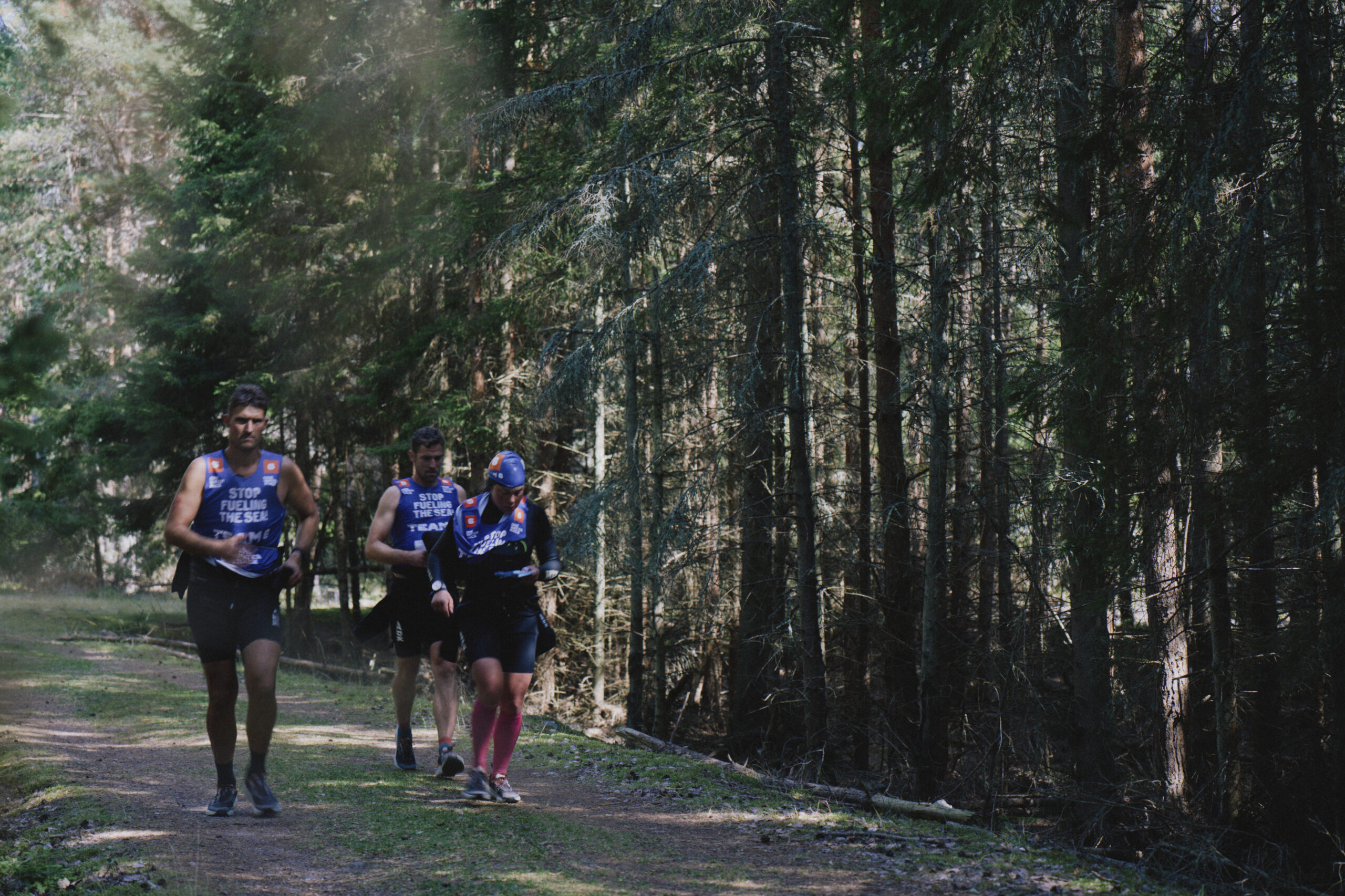
We reached the first CP fast, then the second, and soon the field spread out. We knew the trails, felt strong — but once the adrenaline settled, I realized I was freezing. I kept adding layers. It was brutally cold. After about eight hours, I noticed my breathing getting wheezy… but didn’t think much of it.
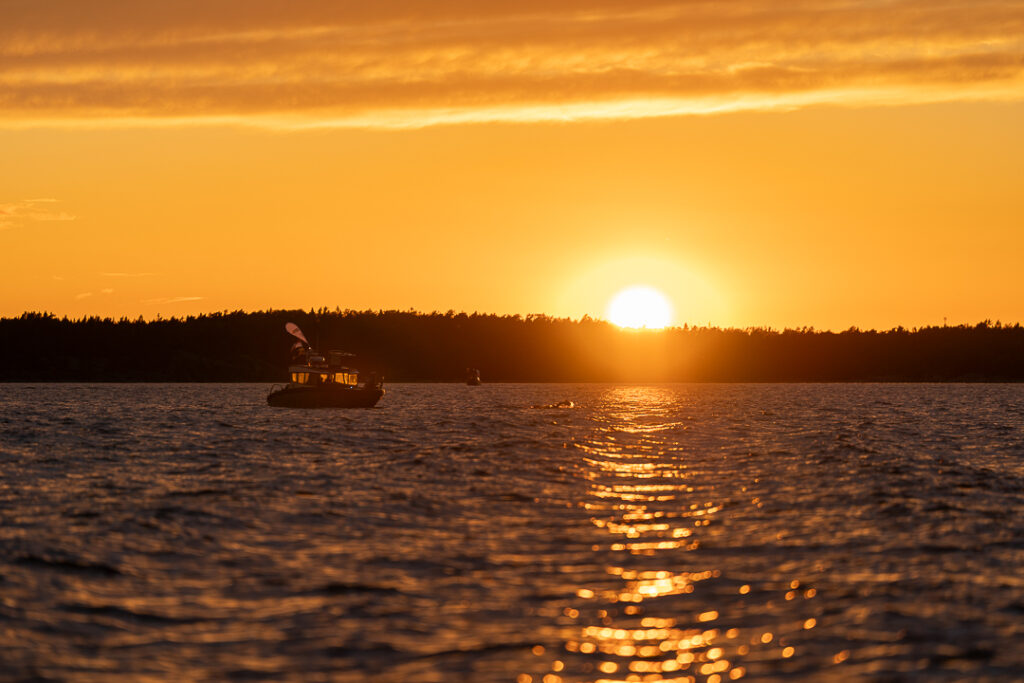
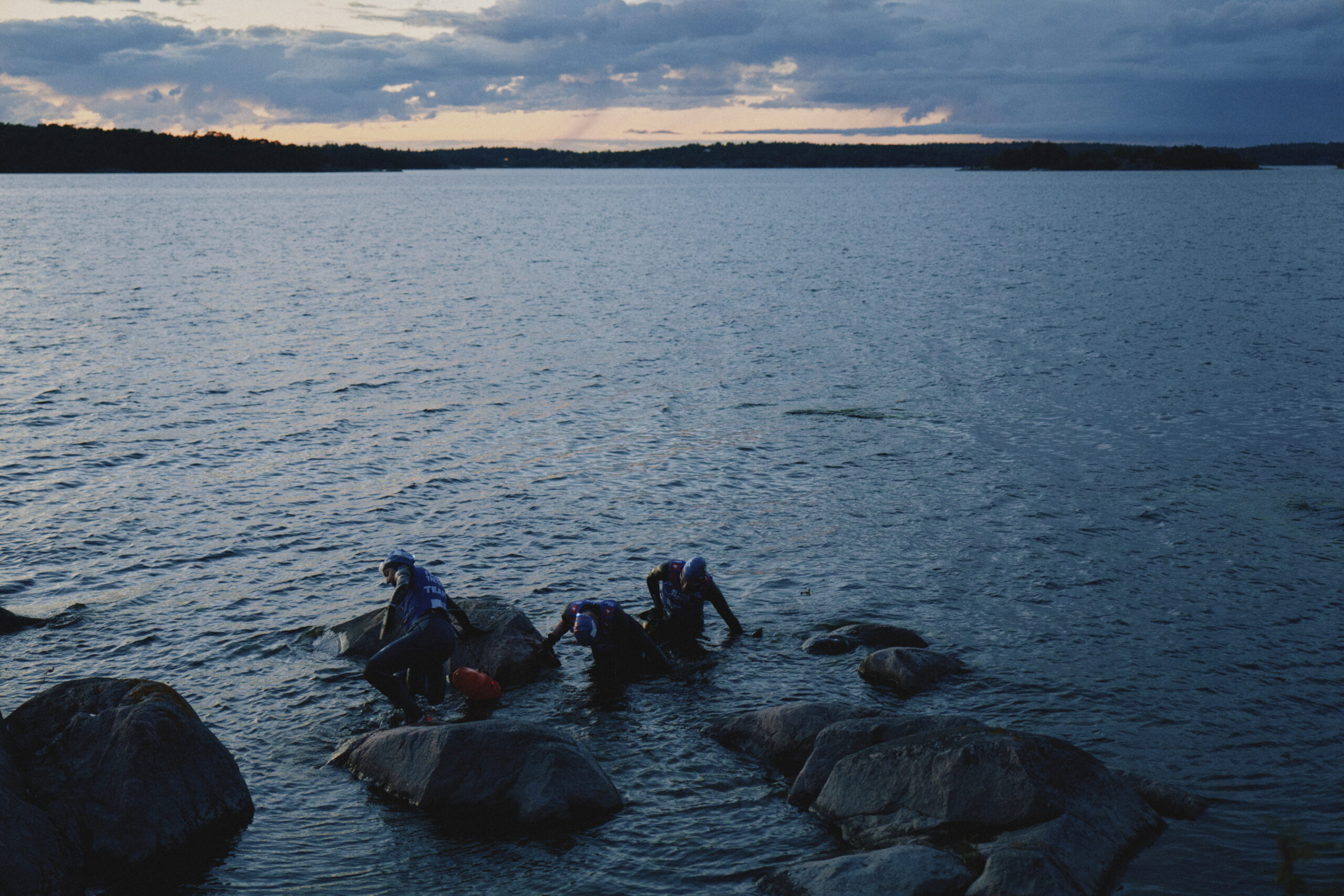
The first night was magical — a pink sky above us as we swam, gliding in sync. It felt hypnotic. I thought: I could do this forever. Alex pulled perfectly, Nanna delivered everything before we even asked, Anders navigated flawlessly.
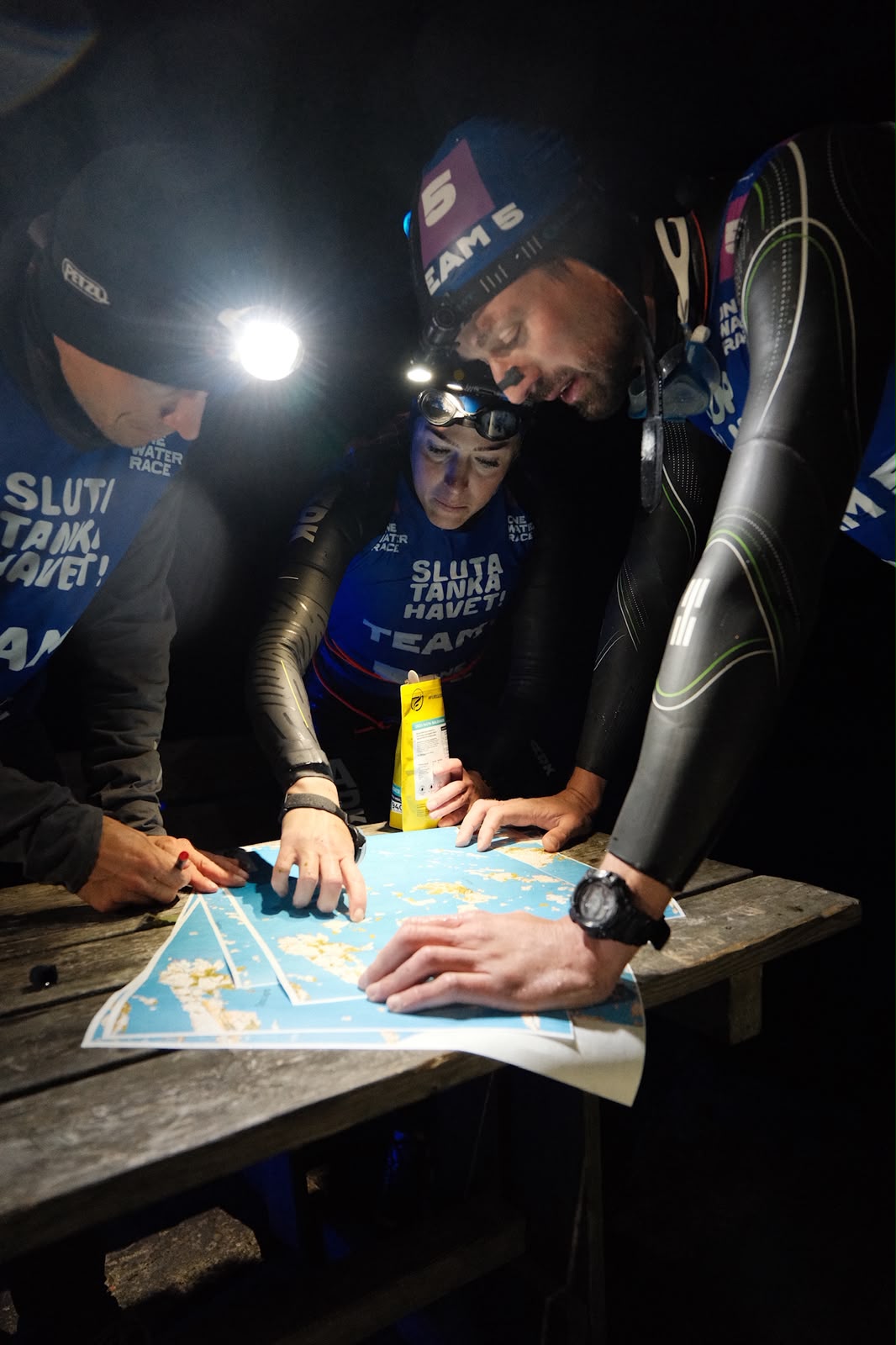
Then darkness deepened, and my breathing worsened. Still manageable — until navigation became the real challenge. We ended up completely off-course in the dark, debating whether a “lake” was actually a lake. It wasn’t. We eventually found our way back, exhausted and frustrated… until we suddenly saw a light and shouted “Nanna!” The relief when she answered was indescribable. That moment gave us a huge energy boost.
Morning came, and my breathing dipped again. The doctor checked me, and we tried to reset with breakfast in the sun. Then came Ragnar — our unofficial fifth teammate — cheering, shouting, lifting us completely. He popped up on more islands than we did. His timing was unreal.
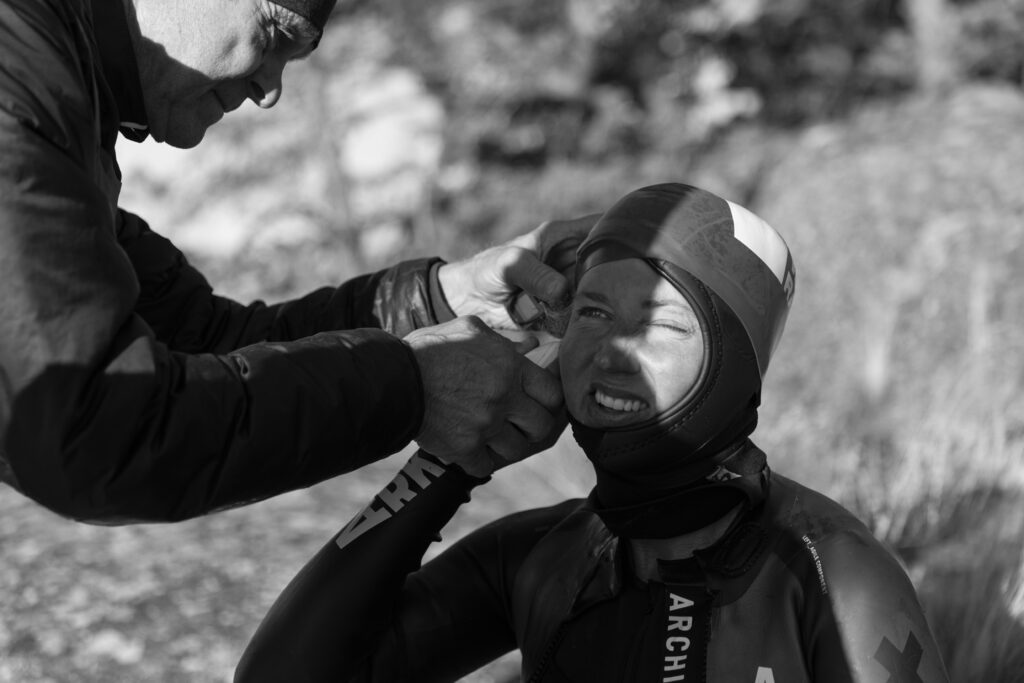
The teamwork that day was incredible. We moved smoothly, fixed mistakes quickly, and ate well. The interactions with locals cheering for us were magical — even selfies on Krokholmen. The swims were cold but manageable as long as I wore a lot. I felt better, Alex’s knee improved, and we fed off each other’s energy. But then came the mosquito hell — thousands of them. I wrapped myself in neoprene and used paddles to see. Anders could barely read the map. It was insane.
Still, we pushed on, laughing and feeling strong. The lighthouse felt closer.
We prepared for a long swim at dusk. My heart rate was high, but we rushed to beat the dark. After about 800 meters, everything collapsed — I suddenly couldn’t breathe at all. Panic hit instantly.
Anders opened my suit, Alex took control, and the boat rushed in. We swam to a tiny rock covered in bird poop, and I changed into my swimrun suit. Miraculously, my breathing felt perfect again. I was sure we would make it.
But darkness made navigation nearly impossible. We stopped to sight, and my lungs tightened again. I said nothing at first — tried to push through — until it became clear: I couldn’t breathe even upright anymore. Another 2 km of swimming was impossible.
And that was it.
Empty. Heartbreaking.
We stopped at 39 hours — one hour longer than last year — but this time, there was no doubt. There was no other choice.
In that moment: Never again.
At breakfast: Maybe.
A week later: When do my toenails grow back, and when does registration open?
We now truly understand the value of multi-day race experience. We learned just as much this year as last year. It’s a privilege to start recognizing the course, to know where we are and where we’re heading.
This race is so much more than reaching the lighthouse — it’s an extraordinary journey from the moment we arrive in Stockholm to the moment we drive back to Gothenburg.
I’m incredibly proud of my teammates and our teamwork. That’s why I believe we will reach the lighthouse.
Maybe next year. Maybe the year after.
But one day — we’ll be there.