
It is 2 AM, deep into the second night of hard racing across the Swedish archipelago.
The team has been racing for 33 hours straight and we are currently sprinting with every bit of strength we have left across the expanse of black water that separates us from the tiny blue light shimmering in the distance that is checkpoint 11.
We have just been told by race control that we have 37 minutes to swim 2.5 km.
According to the skipper, we have been holding 1.3 knots in the last few swims. To make it across the swim in time, we have to almost double the swim speed to 2.3 knots.
We know the overall pace of the team has been dropping over the last few hours, and no one in race control thinks it’s going to be possible for us to make it
We know the overall pace of the team has been dropping over the last few hours, and no one in race control thinks it’s going to be possible for us to make it across the water anywhere close to the time needed to stay in the race.
Normally, the data doesn’t lie, but it never tells the whole story, and that couldn’t be more true than in this moment.
Six weeks earlier
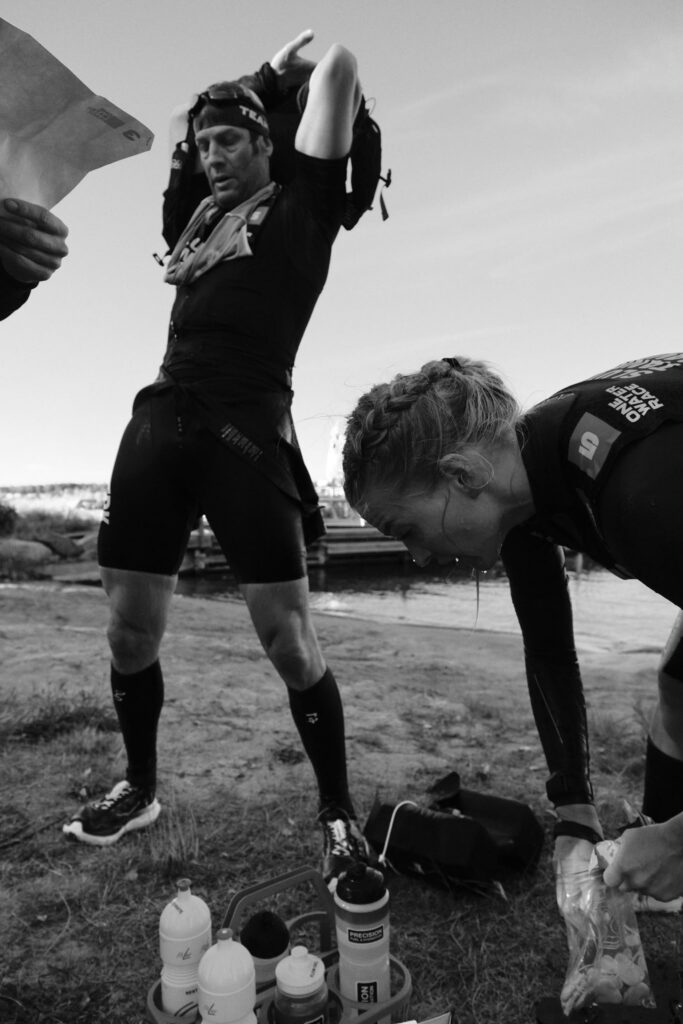
The original line-up for Team Five was Vincent Meyer, Chris Goodfellow and Kayla Kobelin, with Angelus Meyer on the boat.
Unfortunately, in mid-June, Kayla had to withdraw on health grounds. That close to the race, finding another female athlete prepared to take on an event of this kind was a big ask.
But Isabella Brandt stepped up.
She brought additional navigation strength and experience, having raced in One Water both in 2024 and 2025. The team was incredibly lucky to find such a strong third member.
Chris and Vincent had put in a solid block together in May — a good 100-mile swim-run that gave them both confidence and, just as usefully, taught them how to work as a pair.
In early July, the full team met in Stockholm. We had 2 days together and we packed them full. The team arrived in Arholma with two strong navigators, a lot of experience from Angelus on the boat, and a strong swimmer in Chris to lead the water.
Day one: 4 PM
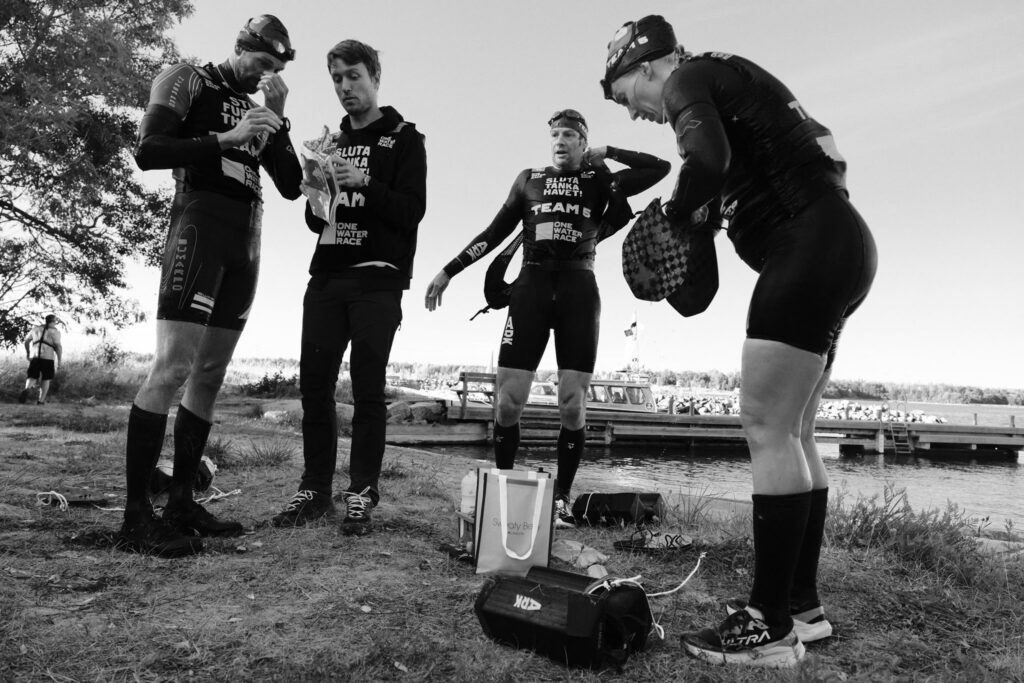
We felt like the 4 PM start suited us. A slow morning to relax before a late afternoon start into cooling air, with the night coming early and navigation being tested sooner.
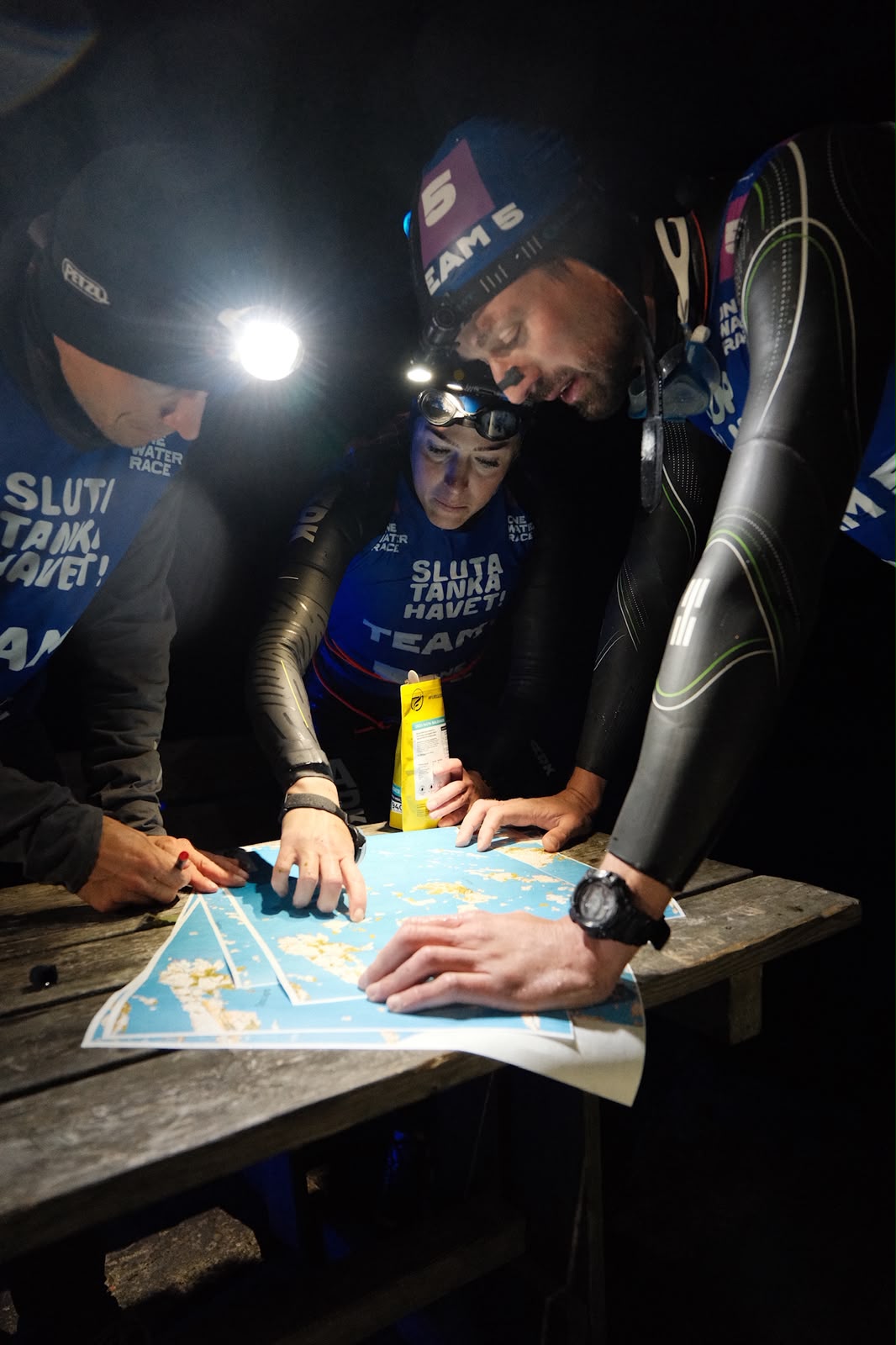
We made a mistake early. The team plotted the route to 1A and then 1B — missing the fact it should be one or the other.
We made a mistake early. The team plotted the route to 1A and then 1B — missing the fact it should be one or the other. It only took two minutes to realise our error, but it was too late, as Angelus was already on the boat heading to our first meet point — checkpoint 1A.
In hindsight, 1B would have been the team’s choice — more running on terrain we knew, less swimming and a faster first leg.
After 1A, the team had a big swim in front of us. At the water’s edge, Angelus offered an alternative: back onto land and run it through. But the team was hot and wanted to swim. It was the wrong call.
The water conditions meant the pace was slower than we had hoped. The race had already split, and we were behind it.
From there on, things settled down and the team made very few mistakes.
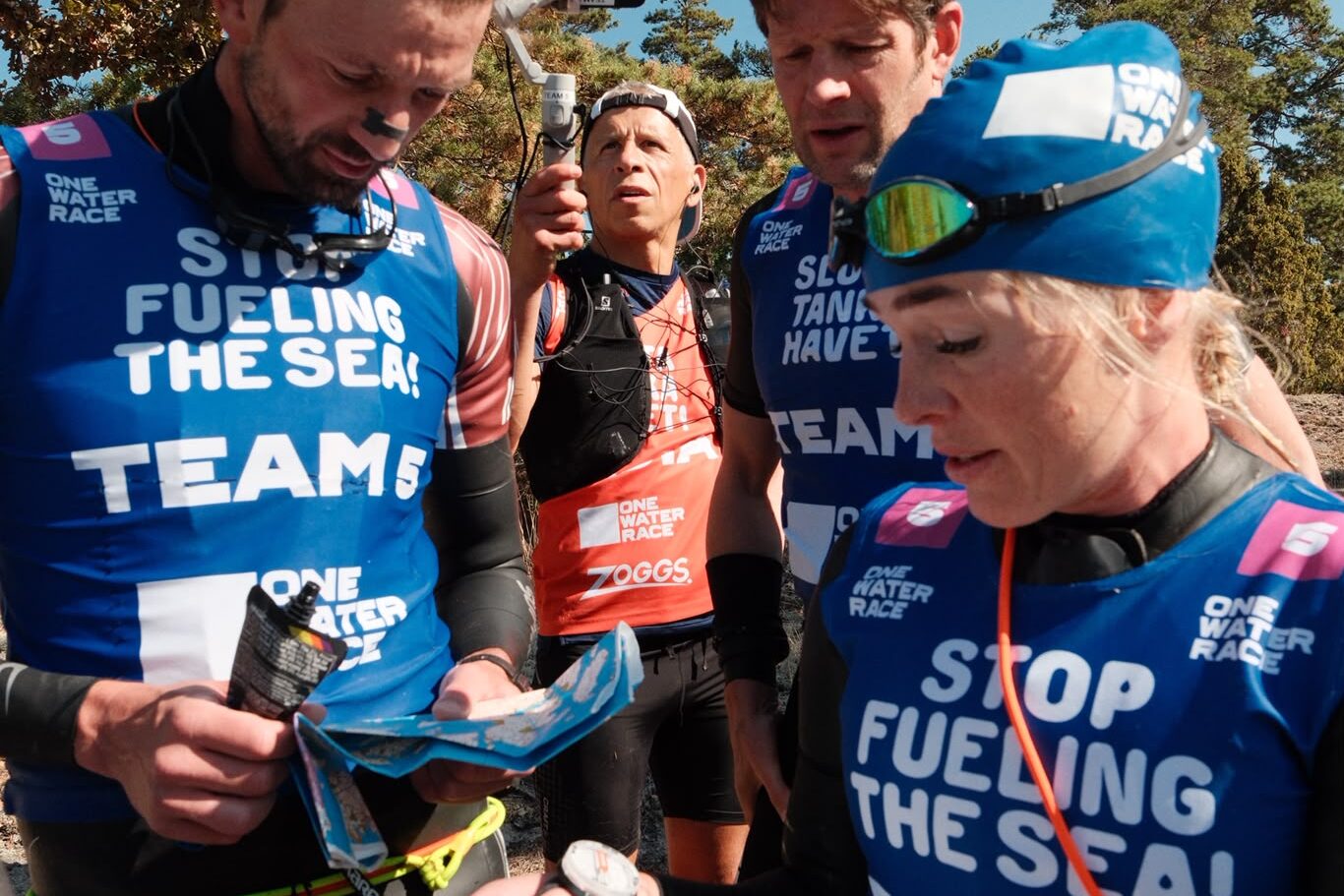
Vincent and Isabella rotated the navigation island to island, and it was close to perfect. The team held the steady, controlled pace we had agreed rather than chasing. Angelus was doing everything right on the boat, keeping the team well fuelled and making navigation easy on both land and water.
The first night
Layered up for the night ahead, we were the last team into the water for some bigger swims as the light started to fade. As we approached Yxlan, Chris was more tired than he wanted to be at this stage (the early big swim still in his shoulders) and spoke up. Isabella took the front for the crossing to Blidö, giving Chris’s shoulder a nice rest for the bigger swims to come.
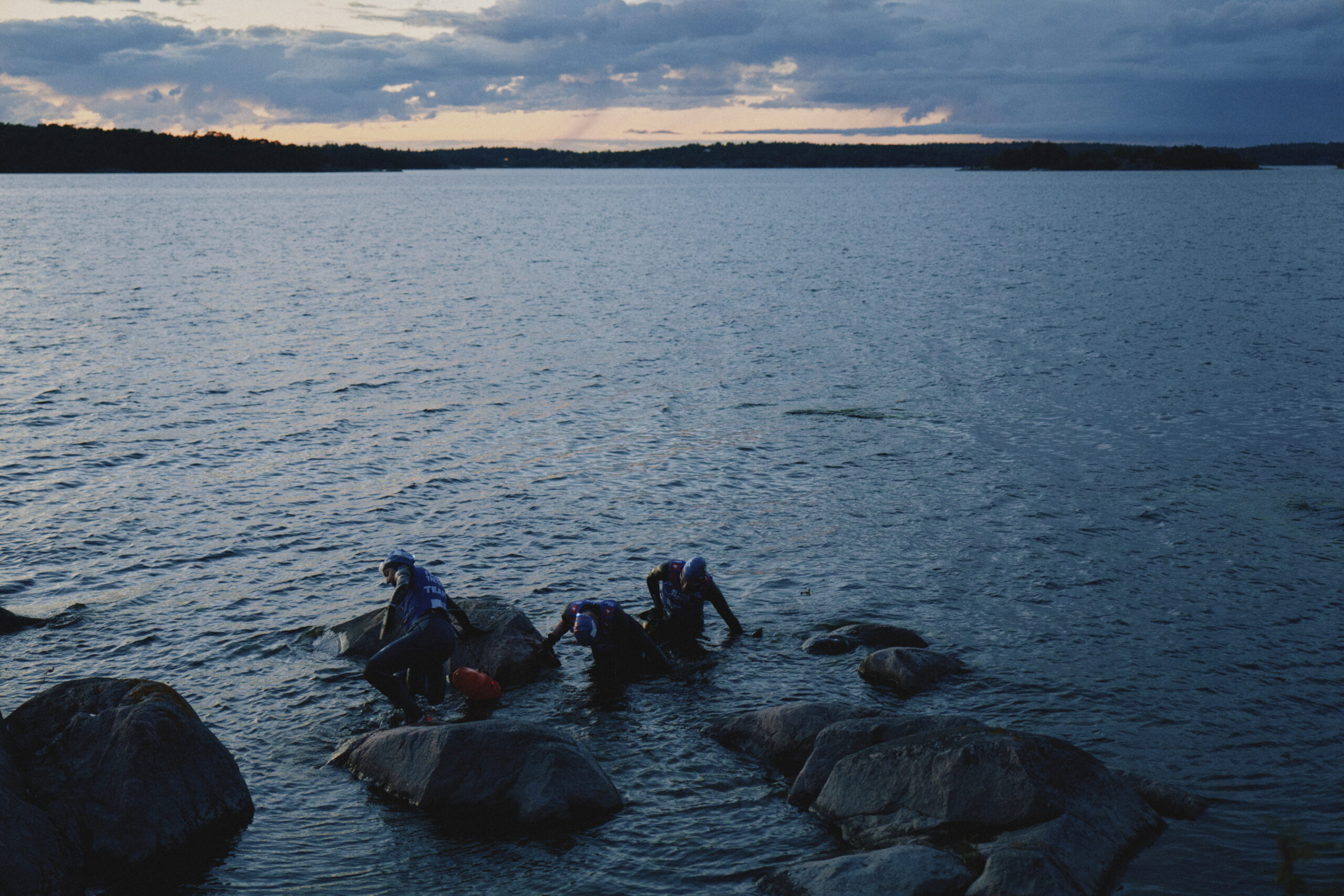
As the temperature dropped, the team kept a steady pace running down Blidö with a solid swim across to Östra Långö and checkpoint 3. This swim even had the Northern Lights to keep us company.
As the team made their way down from checkpoint 3, the navigation both on land and water was going really well. The team were in high spirits and moving at a steady pace.
It was starting to become a real concern.
But as the night progressed, Chris was having stomach trouble: progressively more bloated, making it harder and harder to take on food. It was starting to become a real concern.
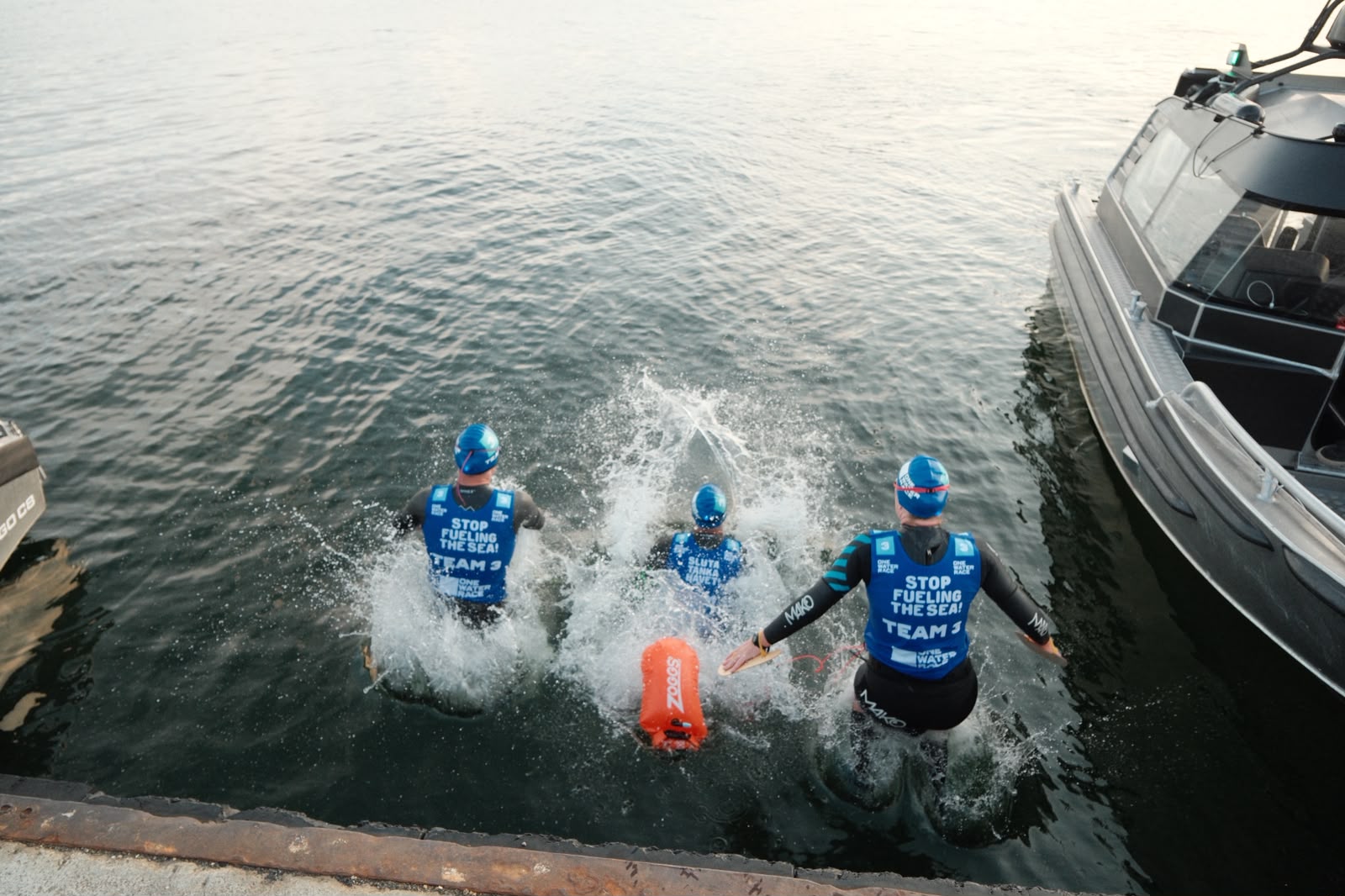
At the water’s edge before the 3 big swims across to Möja, he forced himself to throw up, emptying his stomach onto the dock. Taking on this big swim section of the race with no energy in the stomach was a calculated risk. But the hope was it would bring his stomach back online…
About a kilometre from the end of the final swim to Möja, Chris’s lights went out completely. Isabella took the front again and swam the team to shore.
We crossed Möja, ate, and slept for fifteen minutes.
Day two
Chris was back 🙂 Throwing up had allowed the stomach to reset, and after some food and a short sleep he was back to his normal talkative self.
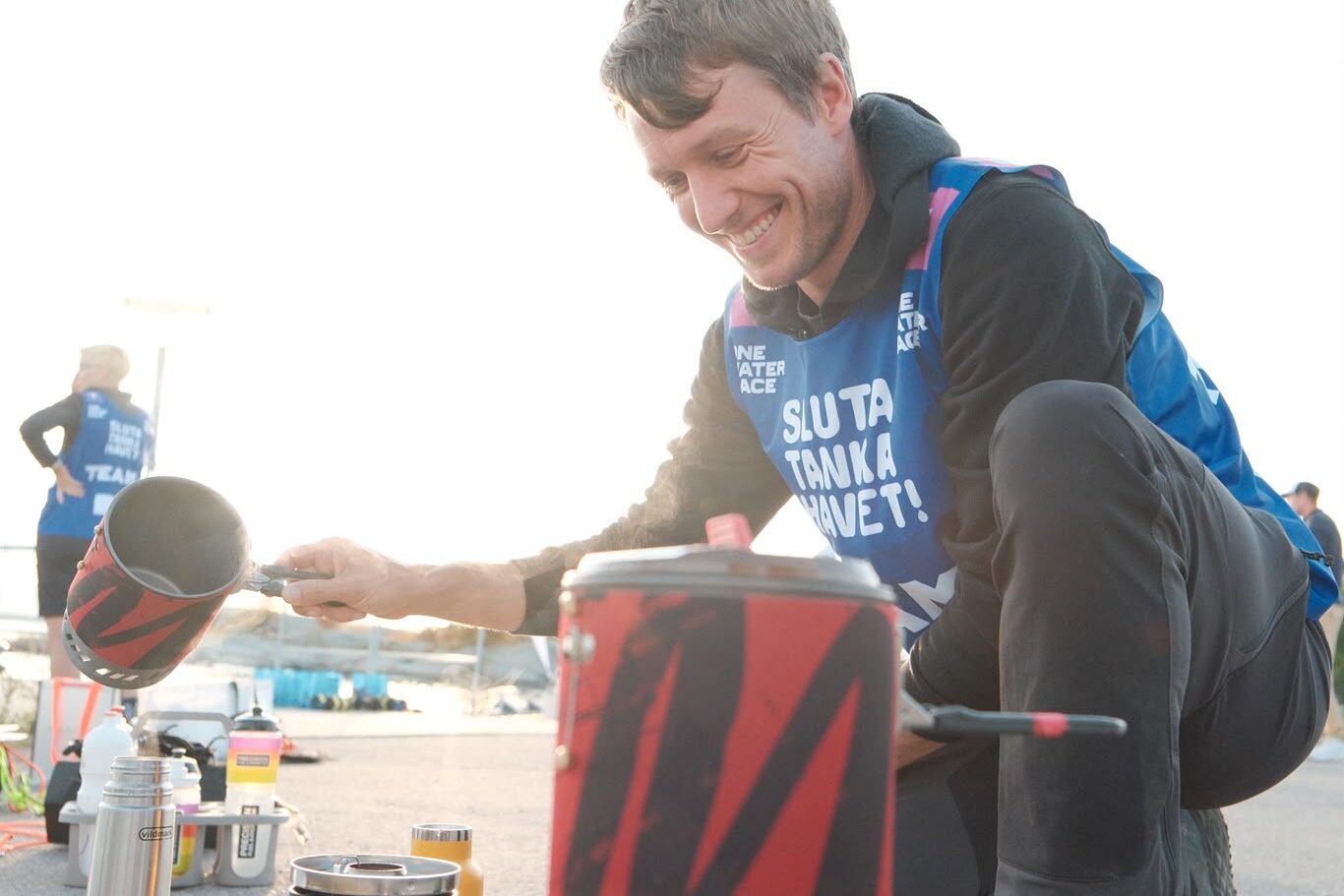
With the sun out and after the 15-minute nap, we were moving properly again — running well, swimming well, near-perfect admin on the boat, talking, laughing and collecting checkpoints. We were having a lot of fun out there and the whole day just disappeared.
Travelling through what have been called the ‘Hell Islands’ in previous editions during the day was probably the most enjoyable part of the entire race.
Travelling through what have been called the ‘Hell Islands’ in previous editions during the day was probably the most enjoyable part of the entire race.
Moving into the evening, time seemed to be slipping away from the team. It was not one thing, just lots of tiny things that slowly were starting to add up, and the time gap to the front of the race was increasing.
The second night
As the day turned into night, Isabella started to have breathing problems. We reorganised around them: Vincent stayed on the nav, the team did shorter swims, longer runs, and changed her wetsuit setup to reduce the compression on her chest. She had not managed to sleep at the first stop, so we deliberately slowed everything down further to let her system wind down before the second sleep we had planned — including telling Chris to stop talking!
She slept for fifteen minutes and rebooted. The breathing settled back to normal.
Game on.
47 seconds
Which is how we came to be approaching the next swim at 2 AM with the whole team feeling strong.
Then Angelus called the team meeting.
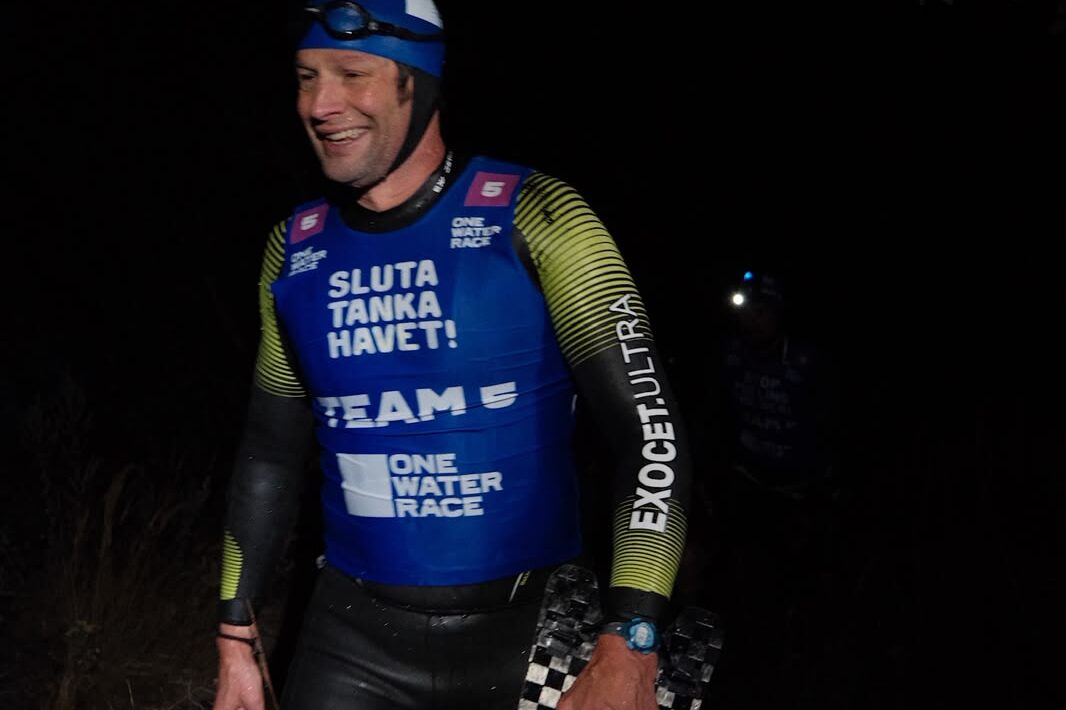
As Angelus started to explain the situation, that we had 37 minutes to swim 2.5 km or we would be out of the race, it was not even a discussion. We all KNEW the answer to the question.
We go, we go hard and give it EVERYTHING we have got, until it is game over. And it was NOT game over, not yet…
We go, we go hard and give it EVERYTHING we have got, until it is game over. And it was NOT game over, not yet…
Everything had changed in a moment. You could almost feel the energy in the team ramp up x 100 as we jumped into the water.
The checkpoint was a blue light on the far shore — a star shimmering over nothing but black water — and Team 5 were swimming with everything they had left in them.
But the blue light did not appear to get any closer. We had no feedback: no split, no distance, no idea.
Then the light was suddenly right there, and Angelus was shouting at us from the boat to go, go, go, go!! We hit the shore and scrambled up to the checkpoint as fast as possible.
Thirty-seven minutes and forty-seven seconds.
We missed the cut-off by 47 seconds.
It was so close, race control had to spend a good 5–10 minutes double-checking the feed from earlier in the day. But they finally confirmed we had missed the cut-off and Team 5’s race was over.
It was heartbreaking to be pulled from the course. The plan for Team 5 had always been to hold a steady pace. To deal with the issues as they arrived and to sleep early so we were in a strong position going through night two and into day three.
Those last 37 minutes showed just how well we had stuck to this plan and how much we had left to give, if time had allowed.
But rules are rules.
You put everything on the line, and it goes down to the wire. Sometimes these things go your way and sometimes they do not. THAT is what sport is all about.
You put everything on the line, and it goes down to the wire.
We would just like to thank our amazing camera team, Bartos and Dave, along with the skippers, Anders and Fredrick, and ALL of the One Water Team for making this experience so special.
THANK YOU GUYS — TEAM 5