

Coming back to One Water Race in 2025 was an absolutely wonderful experience for me and my team. The whole race week went by in a blur after months of arduous preparation, but I’ll try to recount some of the experience and my reflections from the event.
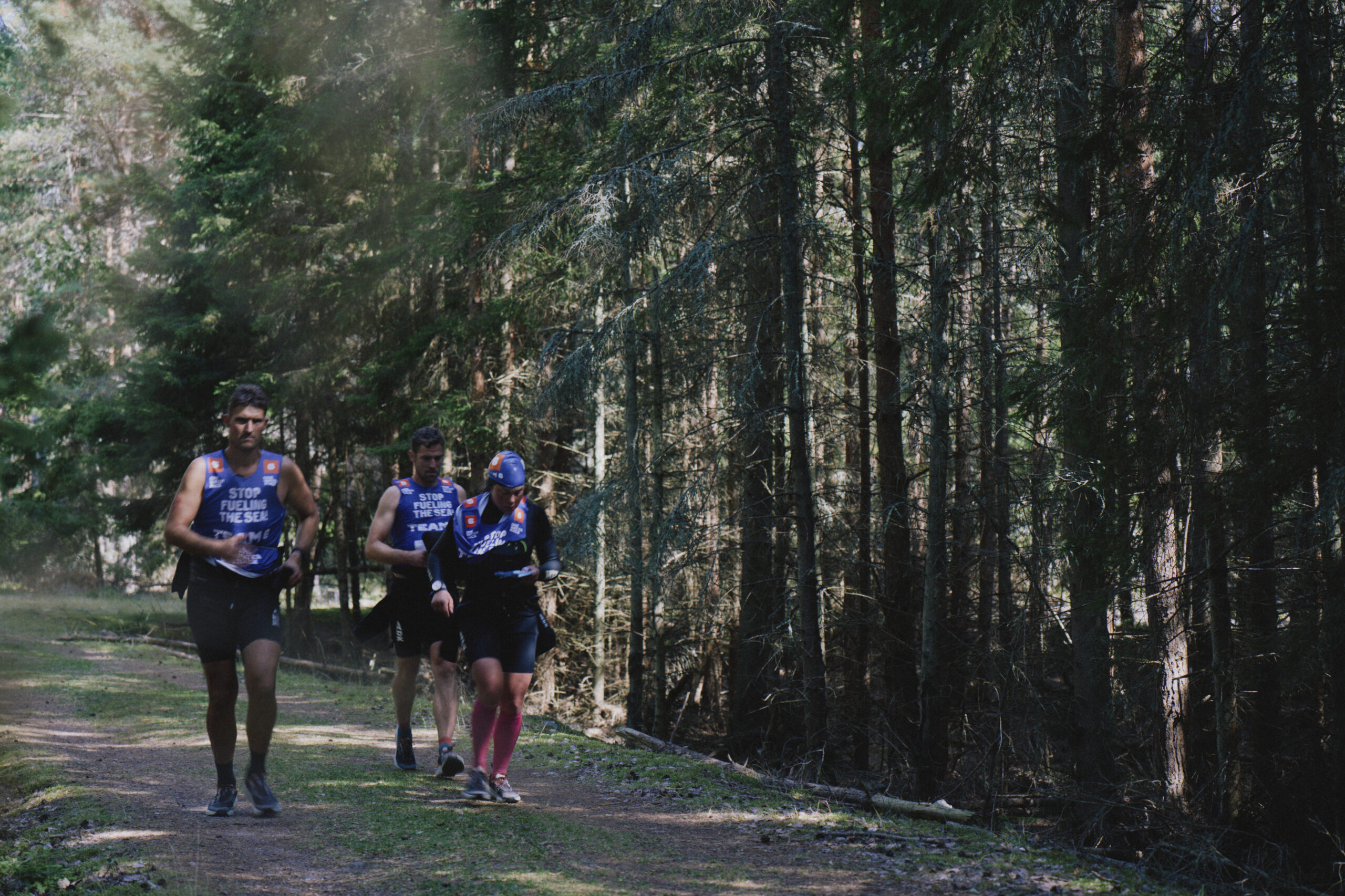
Our team had never met or trained together in person leading up to the race, as we were spread across multiple time zones around the world — from the West Coast to the East Coast of the United States and across the Atlantic to France as well. In light of this, we decided to all come to Stockholm a week before the race and get some practice swimming and running together in the archipelago. We spent several nights together on Runmarö, getting in some tethered swims as well as trail and gravel runs around the islands. The water temperature seemed quite warm a week ahead of the race; we were encouraged that we might not be too cold this year! (That turned out to be a false hope, as the water temperature proceeded to drop several degrees by race day.)
Fast-forwarding to the Sunday before the race, it was incredible to meet all of the teams and watch the intro videos that the One Water media team had put together. There were a record-high ten teams this year, and every single team was so strong and well prepared; it was humbling and an honor to be among all of these teams that had been preparing all year for the race.
The journey up to Arholma was a bit choppier and windier than I remembered, but we made it to the island that would be the start line on Tuesday morning in time for a brief race meeting followed by dinner. The food on Arholma was fantastic just as I remembered, and the nebbiolo wine recommended by Thomas paired nicely for a great evening. We felt ready to race.
We spent a casual Monday preparing last-minute gear choices for the start of the race and generally relaxing — the calm before the storm. We hopped in the water to get a quick team swim together and were immediately greeted by the icy cold water that had been balmy just a few days before. By the end of the day, most of the teams just seemed ready to get the race started, even though the gusting north wind never really died down.
Tuesday morning came soon enough; all of a sudden we had the countdown, maps were handed out, and the race was on! There was a checkpoint on the northeast edge of Arholma this year — the first time there’s been a checkpoint on Arholma, I believe. All the teams began running the trails on the island east in order to get to the checkpoint before heading south toward Landsort.
Our opening hours of the race went well. We knew there would be a lot of fast teams starting off, so we let some teams go and stayed with our pace and our race strategy. We decided, since the water was so cold, that we were going to try to avoid longer swims and opt for longer running routes even if they were perhaps a bit slower. Several teams also did this, but overall there was really great variability in all of the teams’ route choices.

All was going well for our team when we got to the islands of Blidö and Yxlan. At this point my stomach wasn’t feeling too great and we were faced with some longer runs. Near the end of Yxlan, I had to stop running and throw up the entire contents of my stomach (it was a lot!). Looking back, I had just eaten too much food too quickly throughout the day and it needed to come up. After emptying my stomach, I felt much better and we got back on track as a team as we proceeded into stage 2.
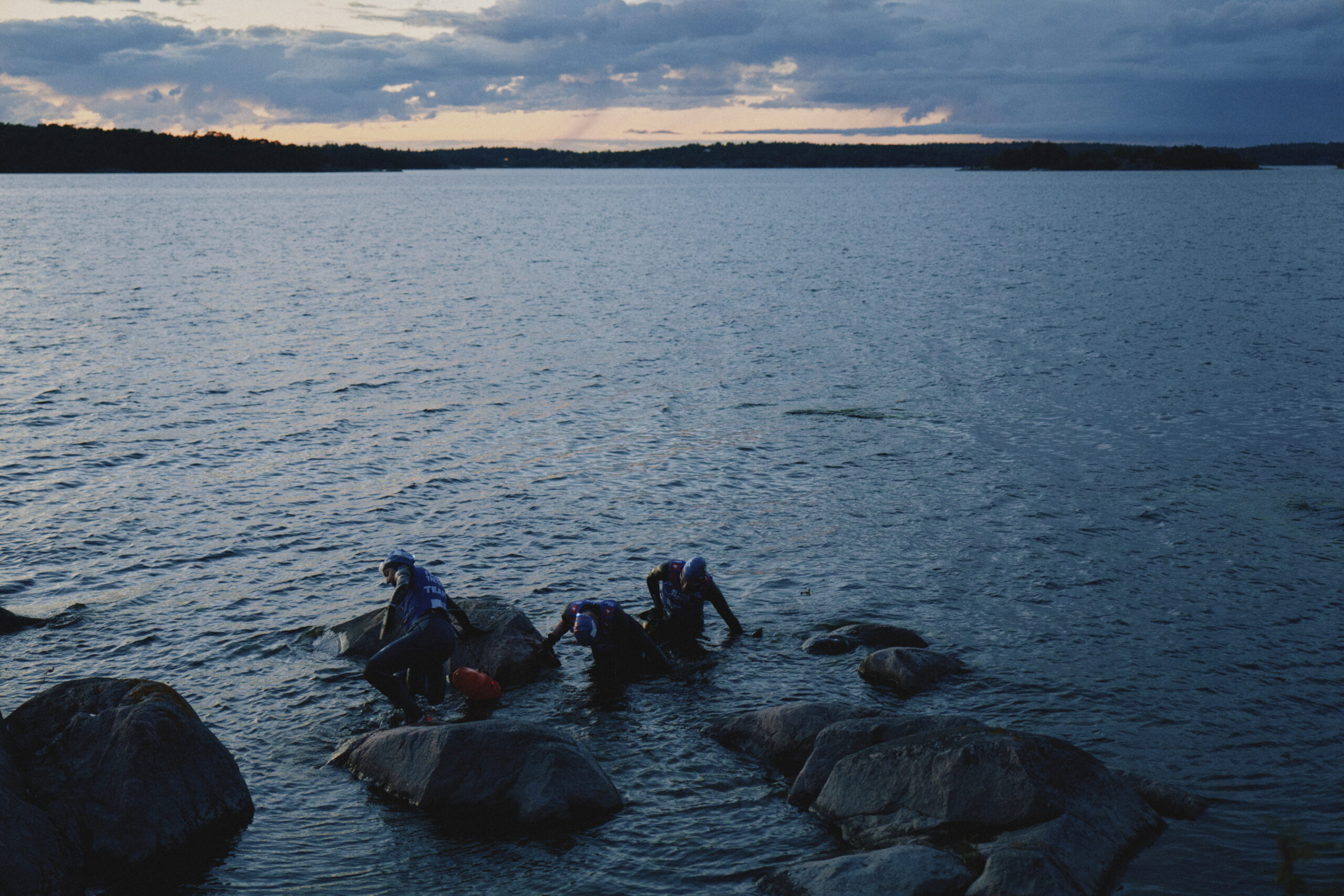
This was where the race introduced a new concept this year: an A-or-B checkpoint choice, forcing teams to make a decision about which checkpoint they would go to. We chose option B (as did every other team, it turned out) to avoid more swimming in the colder-than-expected water. It was around this time that the sun went behind the horizon, and we entered the night mode of the race. We all put on some warmer wetsuits (I put on a second wetsuit over my first one) and began to swim through the night. Our team found swimming through the night to be one of the most enjoyable experiences of the race; the peacefulness of being together as a team and quietly swimming through the archipelago at night was amazing. Jess led the swim from the island of Möja to checkpoint 7 on the next island, and she was able to navigate to the bright blue One Water light beckoning us forward.
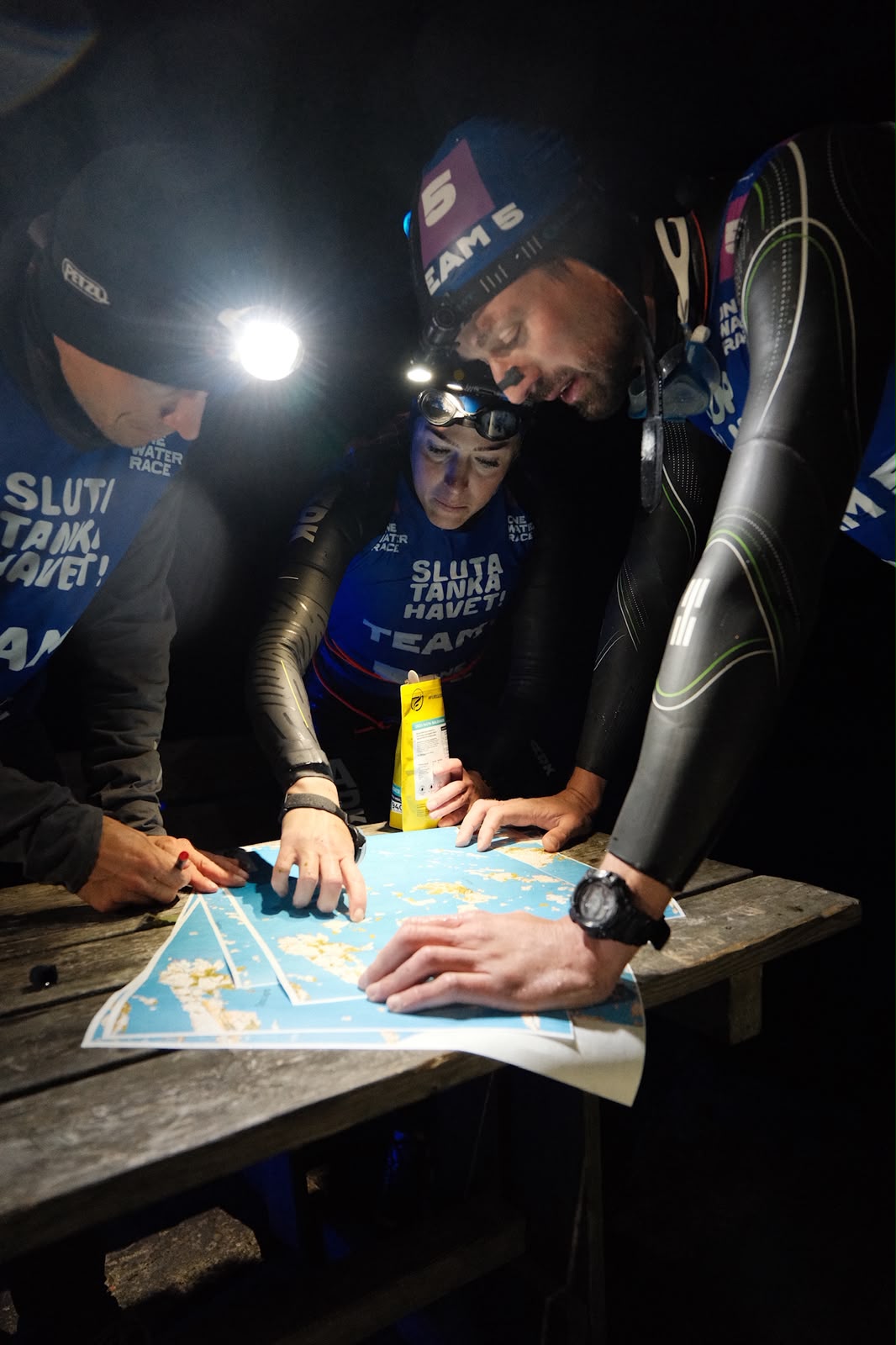
After checkpoint 7, we began the night orienteering adventure. These islands south of Möja — which, according to the map, are called the Storö–Bockö–Lökaö nature preserve — are infamous among the One Water Racers. They are thick with forest, have no roads or trails, and always seem to come at night in the race. Many teams have spent hours lost and bushwhacking on these islands, looking for checkpoints. We knew what was coming and prepared our minds for the challenge. In the end, Jarrod navigated us exceptionally on these islands and we made it to checkpoint 8 with basically no problems. We did get lost crossing a marsh briefly, but quickly realized our mistake and recovered. We held a strict bearing from checkpoint 8 to our rendezvous spot with the boat because we knew that getting lost on this island could cost us hours.
The rest of the night and into dawn passed relatively quickly. We were keeping forward progress and moving south. As the sun began to rise, we appreciated the moment together. With daylight came several waves of sleepiness for all of us. We began to think about a nap but decided to wait until later in the day when we could be with our boat and Kristen.
We kept moving forward, but our pace began to slow a bit on what was by now day two of the race. There were many gravel roads that we would have been running on the previous day that we were now power hiking and slowly jogging on and off. I didn’t know at the time, but Jess was beginning to have more and more trouble with her breathing, especially on any steep climbs up rocks and boulders. On the island of Runmarö, Jarrod once again navigated us directly to the checkpoint, while also managing to half-sleepwalk at the same time. When we reached the dock at the southern end of the island, we decided we needed a quick power nap; we knew we needed to reset and pick up the pace.
After Kristen woke us up on a strict twenty-minute timer, we began to prepare for a long swim. Our strategy was going to be to take advantage of the tailwind and just stay in the water to get to checkpoint 12 — around 3 to 3.5 km of swimming. This turned out to be one of our fastest swims of the race, pushed along by friendly currents from the northern winds.
However, it was at checkpoint 12 where our race would end. Jess finally spoke up about feeling like she was drowning from the inside and that it was getting worse, and we quickly made the team decision to stop our race there.
Looking back, none of us have any regrets about stopping here. In the end, we had made it about 126 km through the archipelago over the course of 30 hours. We worked well as a team the entire time and never lost morale or forward progress.
Many of the remaining teams dropped out over the next several hours, leaving just Team 6 Sweden/Australia and Team 1 Australia (both multiple-time finishers from previous races) as the only teams that made it to Landsort this year. A tough year for all of the teams in the One Water Race 2025, but I wouldn’t have wished it to be any other way.